
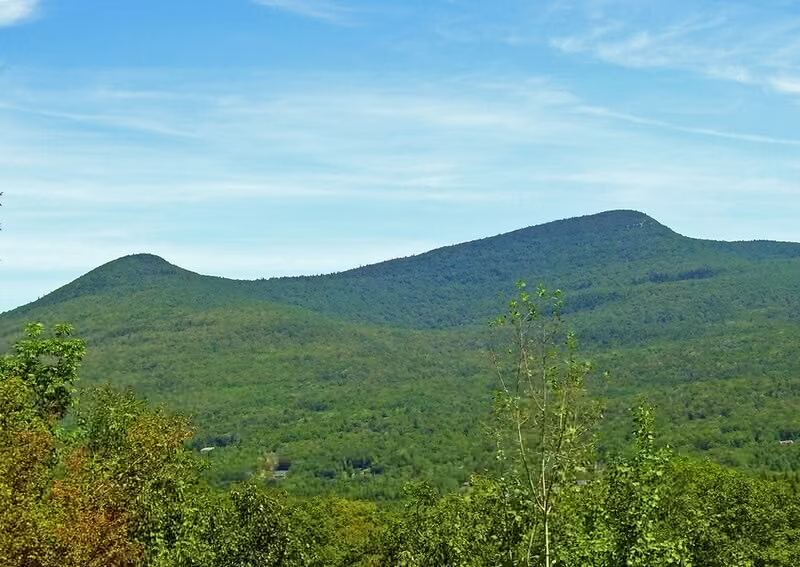
Introduction: The Catskill Park’s Conservation Legacy
A Storied Wilderness Protected for Over a Century
Spanning more than a hundred years, Catskill Park’s tale is one of determination and vision. Since its founding in 1904, this protected area has become a symbol of how people and nature can coexist. Early leaders saw the value in these mountains, working to set aside forests so future generations could enjoy them.
Finding the Balance: Nature and People
From the start, managing the park meant walking a fine line. The goal was to keep wild places safe while also welcoming hikers, campers, and other visitors. This balance—protecting land but allowing respectful enjoyment—remains central today. It’s about keeping streams clear, forests thriving, and trails open, all at once.
Influencers: Conservationists and Organizations at Work
Behind every decision are passionate individuals and groups. From early conservation heroes to modern organizations, these leaders shaped the Catskills. Their work turned past exploitation into careful stewardship, paving the way for the park’s continued preservation and ongoing enjoyment.
With this foundation set, we journey into the roots of how these lands shifted from resource-rich frontier to the cherished wilderness we know today.
The Birth of Catskill Park: Early Visionaries
From Extraction to Preservation
Back in the late 1800s, the Catskills were seen as a place to harvest timber and other natural resources. Logging was common, and wilderness was disappearing fast. Yet, change was in the air. A handful of forward-thinking leaders began to see the mountains as something more than just a resource. They envisioned a place where forests, streams, and wildlife would be protected for the future.
Catalysts Behind the Park’s Creation
The drive to protect the Catskill wilderness found support from communities, politicians, and nature lovers alike. Influential advocates organized efforts and made the case for preserving these wild lands. Their determination pushed New York State to establish the Catskill Park in 1904. This moment marked the start of a new era. The park’s creation reflected a shift toward conserving natural beauty, not just for the present, but for generations ahead.
Early Ideas in Conservation
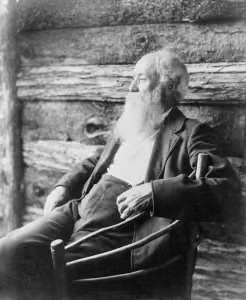
Early conservationists in the Catskills, like John Burroughs(above), believed nature should have a space to thrive without human interference. They argued forests had intrinsic value, and preserving them also helped secure clean water for nearby cities. Protecting lands meant setting them aside from logging, mining, and other uses that would harm the ecosystem.
A Turning Point
Establishing the park set a powerful example of how quickly attitudes toward land use could change. What was once considered a source of economic gain through extraction became cherished as a wilderness worth saving. This set the tone for conservation efforts that followed, as leaders and residents alike learned to value both the scenery and the resources the park protected.
The legacy of these early visionaries shaped land policies that continue to impact the Catskills today.
The Hardenbergh Patent: Land Ownership and Its Conservation Impact
Colonial Roots and the Patent’s Reach
The Catskills’ patchwork of land ownership dates back to the late 1600s, when large tracts of wilderness were divided through colonial land grants known as patents. The Hardenbergh Patent, granted in 1708, covered well over a million acres. Issued under British authority, it stretched across much of the western and central Catskills. The boundaries were hazy, but it shaped who controlled the land for generations.
How the Patent Shaped the Region
Ownership under the Hardenbergh Patent was originally concentrated among a few families and investors. Over the decades, lands changed hands through sale, inheritance, and sometimes dispute. This fragmentation affected how forests, waterways, and resources were used. For much of the 1800s, the region saw industries like logging, tanning, and quarrying thrive, built on private land holdings established by the patent. Because these lands were not publicly owned, early conservation laws had limited reach.
Conservation Challenges and Legal Implications
When New York eventually set out to preserve the Catskills, it faced a patchwork of private and communal titles. Acquiring land for conservation was complex due to tangled claims and unclear boundaries dating back to the patent. This made it harder to create contiguous protected areas, drawing out negotiations and sometimes sparking legal battles. At the same time, the patent’s legacy created distinct local identities and traditions tied to land, which conservationists needed to respect.
Cultural Significance in the Catskills
Beyond legalities, the Hardenbergh Patent fostered a strong sense of place among locals. Families who’d held land for generations held deep connections to their woods and fields. Conservation efforts had to balance respect for this heritage with the broader goal of protecting landscapes. Today, remnants of the patent still influence debates over land use, access, and preservation in the Catskills, reminding us that history and conservation are always linked.
The intricate history of Catskills land ownership continues to color how the region protects and manages its wild places.
Conservation Heroes: Individuals Who Changed the Catskills
Lifelong Defenders of Wild Places
The story of Catskill Park has countless chapters written by passionate individuals. Some were local farmers and teachers, others scientists or outdoor enthusiasts. All became champions for the wild places they loved. Their belief in the park’s unique beauty and ecological importance united them.
Individual Actions, Lasting Change
Pioneers in Catskill conservation were often driven by personal experiences. One might grow up fishing in a clear stream, then fight to keep it free from pollution. Another might spend decades hiking ridgelines, later advocating for trail maintenance and public education. Their legacies live on in persistent efforts to restore—rather than exploit—the park’s forests, waters, and views.
The Spark for Movements
These conservationists shared a common approach: protect first, educate always. They pressed for improved land management and equity in land use when ownership was a tangled web. Their stories inspire people from all walks of life to see themselves as stewards, not just visitors, passing on an ethic of care for generations to come.
Next, the focus turns to the organizations that these trailblazers helped to shape, fueling collective action for Catskill preservation.
Pivotal Organizations in Catskill Preservation
Early Collaborations and Conservation Groups
The preservation of Catskill Park owes much to focused teamwork. In the early years, local associations emerged, composed of landowners, naturalists, and outdoor enthusiasts. These groups raised awareness and pushed for protection measures. Over time, they joined forces with statewide organizations dedicated to conservation, creating coalitions that amplified their influence.
Shifting Strategies and Evolving Roles
As environmental threats changed, so did these organizations. Some began by fighting against deforestation or pollution. Later, they branched into habitat restoration, public education, and wildlife management. Tactics evolved—from lobbying lawmakers to launching educational campaigns and citizen science programs. Throughout, groups sometimes debated the best road to preservation, but their shared mission kept them at the table. Today, The Catskill Center for Conservation and Development, is a leading organization addressing these issues.
Public-Private Partnerships Driving Success
A hallmark of Catskill conservation has been the alliance of public agencies and private organizations. Whether acquiring new parcels for protection or maintaining trail networks, these partnerships pooled resources and knowledge. By blending government authority with community passion, they achieved conservation breakthroughs and expanded the reach of preservation efforts.
With each step, the Catskills’ safeguarding represents the power of collective action and ongoing adaptation. This living legacy shapes how land is managed even today, ensuring that wild and beautiful spaces remain for generations to come.
The Evolution of Wilderness Classifications
Early Developments in Land Classification
When Catskill Park first earned its protected status, there was little guidance on how to manage sprawling wildlands for both preservation and public use. At the outset, accessible areas attracted visitors, while more remote tracts remained untouched. As usage increased, it became clear that simple boundaries weren’t enough to safeguard fragile landscapes or direct recreation responsibly.
Establishing Wilderness and Wild Forest Designations
Conservation leaders responded by introducing a new system of land categories. The Wilderness classification focused on maintaining the wildest, most ecologically sensitive regions. These tracts put the health of forests, streams, and wildlife first, generally prohibiting roads, motor vehicles, and major structures. Visitors here were encouraged to hike, camp with minimal impact, and enjoy solitude.
The Wild Forest designation struck a different balance. While still preserving nature, these areas allowed for a wider range of activities. Mountain biking, snowmobiling, and even some limited infrastructure, like lean-tos or parking areas, found a home here. This approach helped manage visitor impacts, keeping rugged adventures within the park—but away from the most pristine zones.
The Significance for Conservation and Park Management
These classifications shaped the way park rangers, volunteers, and visitors interact with the land. The clear boundaries make it easier to enforce environmental protections, restore damaged areas, and plan for steady visitor growth. The system also communicates what kinds of experiences people can expect, aligning park usage with conservation priorities.
By embracing both strict preservation and thoughtful access, the Catskills’ classification strategy has become a model of practical conservation. It preserves the wild core while allowing people to build lasting memories in the region’s forests and mountains.
With these well-defined zones in place, the park could focus on creating low-impact camping areas that nurture a real wilderness experience.
Primitive Camping Areas: Preserving Wilderness Experience
A Brief History and Philosophy
Primitive camping has a deep history in the Catskills, shaped by the region’s shift from resource use to conservation. Early efforts to protect lands led to the creation of specific camping areas, designed to support low-impact recreation. These sites encourage visitors to enjoy nature while leaving little trace behind. This idea—enjoy but do not harm—guides how these areas are chosen, developed, and maintained.
Minimal Impact in Practice
Primitive camping areas are intentionally simple. They often lack amenities like running water or built fire pits. Campers are asked to bring out what they bring in, camp at least 150 feet from water sources, and avoid disturbing wildlife or delicate plants. These guidelines protect fragile soils and water quality, making outdoor experiences safe for both people and the ecosystem.
Conservation in Action
Preserving the wilderness feel of these places requires ongoing effort. Rangers and volunteers regularly monitor high-use sites for damage, rehabilitate degraded spots, and educate visitors about responsible camping practices. Seasonal limits or temporary closures sometimes protect sensitive habitats during critical times, like spring thaw or nesting periods.
Through careful planning and shared stewardship, primitive camping keeps the Catskills wild and welcoming. As new uses and conservation concerns arise, these areas remain a model for how recreation and preservation can go hand in hand.
Conservation Milestones: Key Victories in Catskill Preservation
Expanding Protected Lands
Key wins in Catskill conservation came with expanding park boundaries and increasing protected acres. Each land addition was a victory for local wildlife, clean water, and future generations. This helped keep development pressures in check and safeguarded vital habitats.
Landmark Policies and Classifications
Defining areas as “Wilderness” or “Wild Forest” was a turning point. These designations protected sensitive ecosystems while allowing for sustainable recreation. Over time, new policies ensured that fragile spots got extra care and stricter visitor guidelines, reflecting a growing scientific understanding of what these places need to thrive.
Overcoming Challenges
Securing these victories was rarely straightforward. Conservationists had to navigate disputes with private landowners, shifting economic interests, and changing environmental threats. Their persistence, creative partnerships, and strong local support turned bold ideas into reality.
With these key achievements in place, new conservation priorities continue to shape management across the Catskills.
Evolving Priorities: From Timber Protection to Ecosystem Conservation
Shifting Conservation Strategies
Early conservation in the Catskills focused mainly on stopping timber harvesting to protect forests and water resources. As years passed, new priorities emerged. Scientists and park managers realized that a healthy forest relied on more than just trees. They began to look at how entire ecosystems functioned, from streams to mountain ridges. This approach meant looking at the big picture, not just single resources.
The Influence of Science
With better research tools, the understanding of the forest deepened. Experts studied soils, habitats, and animal populations. This improved knowledge changed how areas were managed. Instead of only stopping logging, conservation groups started to protect a wider range of plants and animals. They paid attention to rare species and places that supported high biodiversity.
Growing Concerns
Views on what needed protection grew to include water quality and climate. Clean streams and reservoirs became a top priority, not just for nature, but for people living nearby. Park leaders also began looking at how to help the Catskills handle big storms and changing weather. This mindset led to being proactive about threats—from invasive species to climate stress.
The changes in strategy laid a strong foundation for guiding how the Catskills are managed today.
The Recreation-Preservation Balance
Tensions Along the Trail
As the Catskills shifted from timber extraction to conservation, new challenges emerged. Visitors wanted to hike, fish, and camp. At the same time, growing numbers raised concerns over trail erosion, litter, and fragile habitats. Conservationists faced a dilemma: how to let people enjoy the wild without damaging what made it special.
Navigating Competing Demands
Compromises were essential. Instead of closing trails, leaders focused on education and limits. Trail stewards and rangers began patrolling popular areas. The creation of marked trails helped direct foot traffic, protecting sensitive spots. In busier zones, conservationists opted for hardier paths and boardwalks to minimize soil damage.
Camping was another area of focus. By designating primitive sites, managers concentrated impacts in places that could handle it. Simple rules—like “leave no trace,” and pack-it-in, pack-it-out—gradually became part of the park’s stewardship culture.
Success in Balance
These measures worked best when local communities, hikers, and officials worked together. Volunteer groups pitched in, maintaining trails and educating visitors. Seasonal restrictions to protect wildlife and water kept the balance, and adaptive management meant policies changed as new science emerged.
Finding the sweet spot between recreation and preservation remains an ongoing task. Responsible enjoyment and steady stewardship have shaped a thriving Catskill Park, ready for whatever comes next.
Modern Guardians: Today’s Conservation Leaders
The Ongoing Conservation Effort
Today, the legacy of conservation in the Catskills lives on through passionate individuals and dynamic organizations. These modern guardians are focused on sustaining the delicate balance between recreation and preservation. Their work is grounded in experience, research, and a belief that humans and nature can thrive together in the Catskills’ wild spaces.
Key Organizations Leading the Charge
Several groups have become household names in local conservation. These organizations continue to drive impactful projects to maintain the health and beauty of the park.
- Local land trusts actively acquire sensitive lands to safeguard habitats and viewsheds.
- Volunteer trail crews repair erosion and build sustainable paths.
- Educational nonprofits teach visitors about Leave No Trace ethics and native plants.
Collaboration is key. These groups regularly join forces, sharing expertise and volunteers to magnify their impact across the region.
Individuals Making a Difference
Community members, educators, and outdoor enthusiasts are vital to conservation. Whether they are leading a group hike, documenting wildlife, or removing invasive species, these individuals inspire others to become stewards themselves. Their grassroots efforts often spark wider interest, helping bring new voices and energy to the ongoing work.
New Tools and Approaches
Modern conservation leaders are embracing technology to enhance their efforts. They use GPS mapping to track invasive plants, remote cameras to monitor wildlife, and social media to mobilize volunteers and share park updates faster than ever before. These tools help keep the Catskills resilient and connect people with nature in fresh, accessible ways.
Looking Forward
As new caretakers and advocates emerge, their diverse backgrounds and fresh ideas will continue to shape protection efforts. Their creativity and commitment ensure that both the land and the legacy endure.
This commitment to preservation, innovation, and education shapes the ongoing evolution of conservation in the Catskills.
Lessons from the Catskills: A Conservation Model
Insights Gained from the Catskills
The story of conservation in the Catskill Park offers valuable lessons for protected areas everywhere. One main take-away is the importance of persistent, local advocacy. Community members—farmers, hikers, scientists—worked together year after year, building trust and pushing for protections that balanced both nature and recreation. This grassroots dedication proved crucial to long-term success.
What Makes Catskill Conservation Unique
Several features made the Catskill model stand out. Early on, the patchwork of public and private land forced creative partnerships that respected property rights while aiming for ecological health. The introduction of wilderness and wild forest zones enabled flexibility in land use, letting people enjoy the outdoors without sacrificing sensitive habitats. Innovation, such as adopting minimal-impact camping, kept the landscape welcoming but protected.
Tackling Ongoing Challenges Collaboratively
Challenges like invasive species, visitor pressures, and climate threats still test conservation efforts in the Catskills. Modern advocates respond with teamwork. Agencies and local groups join forces to offer education, restore trails, and monitor wildlife. New tools—GPS, remote cameras, community science—bring more people into stewardship. These collaborative, adaptive approaches continue to shape a resilient conservation future, inspired by lessons from the past.
Conclusion: The Future of Wilderness Protection in the Catskills
Reflecting on a Lasting Conservation Legacy
The Catskills’ protected wildlands have benefited from more than a century of passionate conservation work. Generations of leaders and organizations built a strong foundation, skillfully balancing the need to safeguard ecosystems with the public’s desire for outdoor experiences. This legacy still shapes land management decisions and inspires continued stewardship.
Facing New and Ongoing Challenges
The modern era brings new tests. Invasive species, changing climates, and increased recreational demand are now front and center. Conservationists must find ways to adapt, update strategies, and nurture community partnerships to keep Catskill Park resilient for generations.
The groundwork laid by earlier advocates shines as a guide. Their solutions—collaboration, education, and flexibility—remain essential for facing tomorrow’s uncertainties.



