
Early Life and Introduction to the Catskills
Birth and Upbringing in Roxbury, New York
John Burroughs was born on April 3, 1837, in the rural town of Roxbury, in upstate New York’s Delaware County. Nestled among the rolling hills and dense forests, Roxbury provided a picturesque setting for young Burroughs to grow up. His family’s humble farm life fostered a deep connection to the land, which would become the cornerstone of his environmental advocacy and literary career.
First Encounters with Nature in the Catskill Region
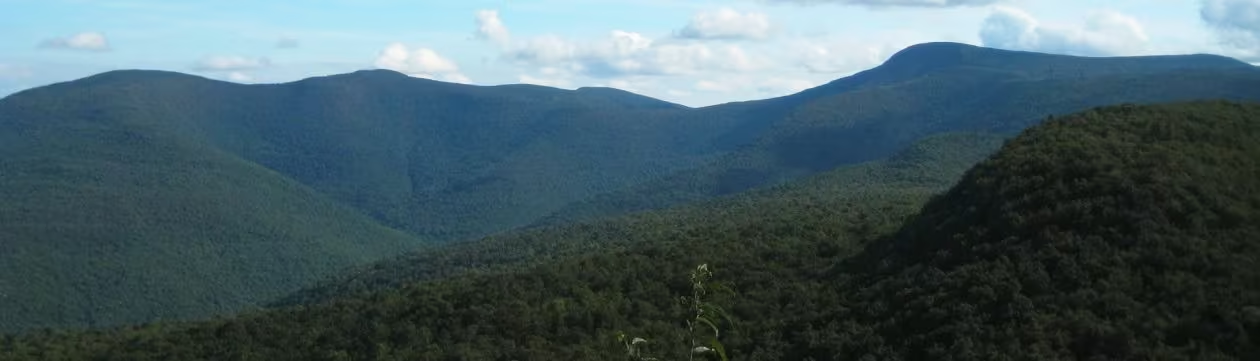
The Catskill Mountains were integral to John Burroughs’ early experiences with nature. As a child, he roamed the vast woods, explored the creeks, and developed a keen sense of observation. These early encounters instilled a lifelong passion for the natural world, shaping his identity as a naturalist. The sheer beauty and diversity of the Catskills’ flora and fauna were endlessly fascinating to him, forming the backdrop of many vivid memories and future writings.
Formative Experiences that Shaped His Naturalist Perspective
Burroughs’ formative years were marked by a profound curiosity and a desire to understand the natural environment around him. The simplicity of farm life required a careful observation of seasons, weather patterns, and ecological cycles—an experience that significantly influenced his later works. Local picnics, fishing trips, and solitary adventures in the forest enriched his knowledge and appreciation of nature. This early immersion set the stage for his unique perspective on conservation and deeply influenced his writings. One such trip touches upon Hancock, NY. In his book Pepactin, Burroughs details his journey by boat down the Pepacton River, now called the East Branch of the Delaware River. The trip begins in Arkville, NY, and ends in Hancock, NY.
Burroughs’ education played a crucial role in his development. He attended a one-room schoolhouse where his love for reading and writing flourished. His exposure to notable authors who wrote about nature, such as Ralph Waldo Emerson and Henry David Thoreau, further inspired him. Their works, alongside his own observations, forged a powerful blend of literary and naturalist elements in his writing.
Growing up in the Catskills, Burroughs developed a philosophy grounded in the inherent value and beauty of nature. His belief in the importance of preserving these natural landscapes would guide his later contributions to the conservation movement, setting the stage for his lasting legacy.
This immersion in the Catskills’ landscape, coupled with a strong educational foundation, connected him profoundly to the natural world, paving the way for his future works and advocacy.
Literary Contributions and Nature Writing
Major Published Works Focusing on the Catskills
John Burroughs’ profound connection to the Catskills formed the bedrock of his prolific writing career. His major works include “Wake-Robin,” “Winter Sunshine,” and “Signs and Seasons,” which explore the beauty and intricacies of the Catskill region. These books not only document the flora and fauna of the area but also reflect on Burroughs’ personal experiences and observations, drawing readers into his world of natural wonder.
Development of His Distinctive Nature Writing Style
Burroughs’ writing stands apart due to its blend of scientific observation and lyrical prose. Influenced by Emerson and Thoreau, he combined accurate detail with a poetic sensibility. This approach made his work accessible and enjoyable to a broad audience. His essays are characterized by a gentle, reflective tone that invites readers to slow down and appreciate the subtleties of the natural world. This distinctive style was pivotal in shaping American nature writing and establishing it as a respected literary genre.
Influence on American Nature Literature
Burroughs’ contributions significantly impacted American nature literature. His ability to portray the natural world vividly and thoughtfully inspired many contemporaries and future writers. Through his essays and books, he cultivated an appreciation for nature and conservation among the public, fostering a deeper connection between people and the environment. His works encouraged a broader environmental consciousness, paving the way for future environmental advocacy and preservation efforts in the Catskills and beyond.
John Burroughs’ influence extends into the conservation movement, where his works continue to inspire an enduring legacy of wildlife protection and habitat preservation.
Slabsides and Woodchuck Lodge
Establishment of His Rustic Retreat Slabsides
John Burroughs, deeply enamored with nature, found solace in creating a rustic retreat called Slabsides in the hills of West Park, New York. Built in 1895, Slabsides was more than just a getaway; it was a manifestation of Burroughs’ dedication to simplicity and a close connection with the natural world. This handcrafted cabin, named for its rough-hewn siding, served as a sanctuary where Burroughs could immerse himself in the pristine beauty of the Hudson River Valley.
At Slabsides, Burroughs welcomed a myriad of guests, including notable figures such as Walt Whitman and Theodore Roosevelt, who shared his passion for the environment. Here, he penned numerous essays and books that seamlessly blended scientific observation with poetic prose, reinforcing his philosophy of nature’s intrinsic value. Slabsides became a testament to Burroughs’ belief that true knowledge and appreciation of nature stem from direct, personal experience.
Significance of Woodchuck Lodge in Roxbury
Woodchuck Lodge, located in Burroughs’ birthplace of Roxbury, New York, holds equal significance in his life and work. This ancestral farmhouse, where Burroughs spent his later years, stands as a historical beacon of his deep-rooted connection to the Catskill region. It was here that Burroughs lived out his twilight years, continuing his writing and reflecting on his journey as a naturalist.
Woodchuck Lodge is more than just a physical space; it symbolizes Burroughs’ enduring legacy and commitment to conservation. The simplicity of life at the Lodge mirrored his belief that living harmoniously with nature fosters a more profound sense of stewardship and respect for the environment. Today, Woodchuck Lodge remains a captivating destination for nature enthusiasts and scholars, offering insights into Burroughs’ life and his pioneering conservation ethos.
Centers for Conservation Thought
Both Slabsides and Woodchuck Lodge evolved into more than personal retreats—they became hubs for conservation thought and education. Burroughs utilized these properties to espouse his views on nature preservation, inspiring countless visitors with his wisdom and environmental philosophy. The gatherings at Slabsides, in particular, fostered dialogue among early conservationists, playing a crucial role in the burgeoning American environmental movement.
By opening these retreats to others, Burroughs ensured that Slabsides and Woodchuck Lodge transcended their physical boundaries to become symbols of a broader conservation ethos. The interaction with nature at these sites instilled profound respect and stewardship in visitors, aligning with Burroughs’ lifelong mission to harmonize human life with the natural world.
Through his retreats, John Burroughs not only deepened his own connection to nature but also sowed the seeds of environmental consciousness that continue to flourish in modern conservation efforts.
Conservation Advocacy and Philosophy
Key Conservation Initiatives in the Catskills
John Burroughs was deeply committed to preserving the natural beauty of the Catskills. Key among his initiatives was raising public awareness about the region’s unique ecosystems and the need for their protection. Through his persuasive writings and public lectures, he inspired a collective sense of responsibility toward nature conservation.
Burroughs also spearheaded efforts to restore and maintain forest habitats, advocating for the protection of native flora and fauna. By promoting sustainable practices such as responsible logging and habitat restoration, he contributed significantly to the early conservation movement in the Catskills.
Philosophy Regarding Nature Preservation
Burroughs’ conservation philosophy was rooted in a profound respect for nature as a living entity. He believed that humans should act as stewards rather than conquerors of the natural world. His writings often reflected this perspective, highlighting the intrinsic value of nature beyond its utilitarian benefits.
He emphasized the importance of experiencing nature firsthand, encouraging people to engage directly with the environment. This hands-on approach fostered a deeper understanding and appreciation of the natural world, thereby motivating individuals to take action in its preservation.
Impact on American Environmental Movement
Influence on early conservation policies
John Burroughs played a pivotal role in shaping early American conservation policies. His friendship and collaboration with Theodore Roosevelt, who was an ardent supporter of conservation, brought Burroughs’ ideas into the national spotlight. Roosevelt often sought Burroughs’ advice, and the two shared numerous excursions in nature where they discussed the importance of preserving America’s natural landscapes. Burroughs’ writing also influenced policymakers; his lyrical yet scientifically grounded observations made a compelling case for the necessity of conservation. His essays, widely read and admired, planted the seeds for future legislation aimed at environmental protection and sustainable practices.
Role in inspiring future generations of environmentalists
John Burroughs inspired a generation of naturalists, writers, and conservationists with his profound love for nature and eloquent prose. His works encouraged readers to connect deeply with the natural world and recognize their role in its preservation. The simplicity and sincerity of his observations made nature accessible to the public, fostering a collective appreciation for the environment. Burroughs’ mentorship of younger naturalists, coupled with his extensive network, ensured that his conservation ethos was passed on. Figures such as John Muir acknowledged Burroughs’ influence and numerous contemporary environmentalists trace their inspiration back to his teachings and writings.
Lasting legacy in modern conservation efforts
The legacy of John Burroughs endures in contemporary conservation efforts. His philosophy of respecting and coexisting with nature continues to resonate. Burroughs’ advocacy for the Catskill region laid a foundation for future conservation work. His former homes, Slabsides and Woodchuck Lodge, now serve as historic sites where visitors can learn about his life and contributions to nature writing and conservation. These sites stand as testaments to his lasting impact, serving both educational and inspirational roles for modern conservationists. Burroughs’ work paved the way for a broader environmental movement that continues to prioritize sustainability and the protection of natural habitats.
John’s influence remains evident in various environmental policies and initiatives that draw on his holistic understanding of nature. This enduring legacy underscores the perpetual relevance of his work and its foundational role in shaping American environmental thought and action.
Cultural and Historical Significance
Recognition and Preservation of Burroughs-Related Sites
John Burroughs’ enduring legacy is powerfully evident in the careful preservation of sites significant to his life and work. Key locations like Slabsides and Woodchuck Lodge are cherished landmarks, maintained not just as historical artifacts but as living tributes to his contributions to American naturalism. These sites offer visitors a window into Burroughs’ life and philosophy, celebrating his dedication to observing and preserving the natural world. They stand as a testament to Burroughs’ profound impact on environmental thought and the continuous efforts to honor his memory and influence.
Continuing Influence on Environmental Education
Burroughs’ influence extends beyond the preservation of physical sites; it is deeply embedded in environmental education programs. Schools, universities, and conservation organizations draw inspiration from his works to teach students and enthusiasts about the beauty and importance of nature. His essays and observations provide rich, insightful content that resonates with new generations, fostering a deeper appreciation and understanding of the natural world. This ongoing educational impact ensures that his vision of nature conservation remains relevant and impactful in contemporary society.
Relevance to Contemporary Conservation Challenges
In a world facing significant environmental challenges, John Burroughs’ philosophy of harmony with nature holds great relevance. His insistence on the value of direct experience with nature echoes in today’s movements advocating for sustainable living and environmental stewardship. As modern conservationists grapple with issues like climate change, habitat loss, and biodiversity decline, Burroughs’ work serves as a guiding light, emphasizing the need for a deep, personal connection with the environment. His legacy continues to inspire actions aimed at preserving the natural world for future generations.
Burroughs’ legacy is not confined to the past; it actively shapes our present and informs efforts to secure a better future for our planet. Through preserved sites, educational initiatives, and contemporary conservation practices, his voice remains a powerful advocate for the enduring bond between humanity and nature.
______



