
Introduction: The Birth of a Conservation Legacy
A Landscape Like No Other
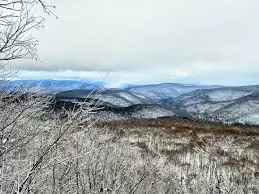
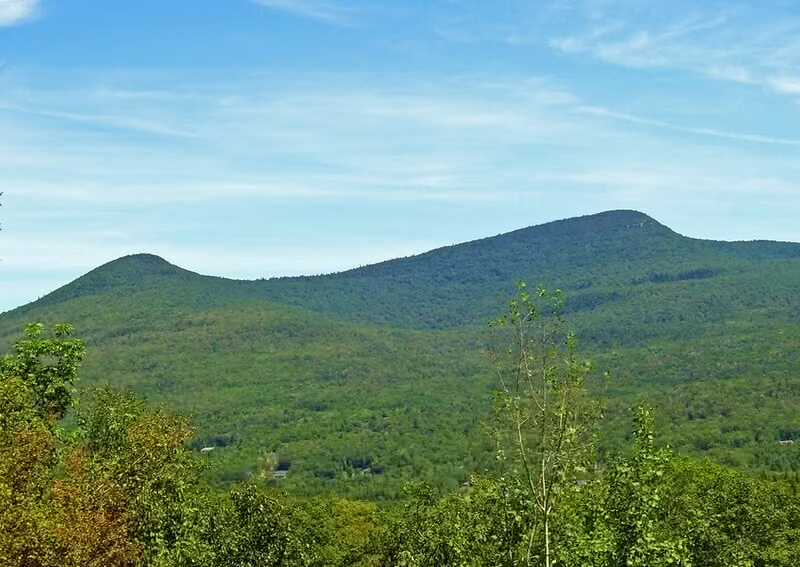
Nestled in southeastern New York, the Catskill Forest Preserve is a living reminder of both natural beauty and the American conservation spirit. The preserve is famous for its iconic peaks, with over a dozen mountains soaring above 4,000 feet. These dramatic summits are surrounded by thick forests, rushing streams, and an ecosystem teeming with wildlife. Alongside its rocky slopes and lush valleys, rare plants and ancient trees thrive. This combination gives the Catskills an ecological richness found in few other regions.
The Spark of American Conservation
The Catskill Forest Preserve holds a special place in U.S. conservation history. In the late 19th century, unchecked logging and land exploitation threatened the region’s forests and water sources. Alarmed citizens and lawmakers took bold action, recognizing the need to protect these lands before the damage became irreversible. Their efforts led to some of the earliest and strongest conservation measures in America, including legal protection that remains unique today.
An Enduring Model for Preservation
The early success of preserving the Catskills set important precedents. It showed that natural areas could be safeguarded for public benefit, ensuring both access and protection. The approaches and legal tools developed here—like the “forever wild” principle—became models for future conservation work nationwide. This legacy continues to inspire those who work to balance human activity with the needs of the wild.
With origins rooted in urgent action and lasting vision, the story of the Catskill Forest Preserve is far from over. Its achievements laid a strong foundation, upon which new ideas and strategies continue to grow.
The Historical Origins of the Catskill Forest Preserve
Setting the Stage: Environmental Change and Rising Concerns
By the late 1800s, the Catskill region faced dramatic change. Vast forests once blanketing its hills were rapidly shrinking, thanks to aggressive logging and land clearing. Rivers that fed growing cities began to run muddy and low. Residents watched as once-abundant wildlife became scarce, and streams that had supported thriving fishing communities dried up during the summer months. These visible impacts led to public worry—the landscape was transforming, and not for the better.
A Climate for Action: Advocacy Meets Opportunity
New Yorkers soon realized that protecting the Catskills was not only about saving scenery. Clear waterways were essential for New York City’s rapidly expanding population, and healthy forests provided resilience against floods and erosion. Policymakers heard growing calls from landowners, outdoor enthusiasts, and city dwellers alike. Conservation advocates pressed lawmakers to act before the damage became irreversible.
The “Forever Wild” Breakthrough
The real turning point came in 1894, when New York State adopted a powerful clause in its constitution. This “forever wild” provision declared that state land within the Catskills (and Adirondacks) must remain untouched by development and logging. No roads could be built, and no timber harvested, preserving the wilderness in perpetuity. It was a radical step at the time—one that made New York a national leader in public land protection and set the standard for bold action.
Early Obstacles and Hard-Won Triumphs
Getting these protections in place was far from easy. Timber companies pushed back, arguing for their rights to harvest wood. Some locals feared loss of income or access. Early conservationists stayed the course, building broad support and highlighting the benefits of preserved open spaces. Victories didn’t happen overnight, but with each challenge, the resolve to protect the Catskills grew stronger.
The stage was now set for new voices and ideas to shape the future of Catskill conservation—a story defined not only by political will, but by the vision and inspiration found in the land itself.
John Burroughs: The Philosophical Architect of Catskill Conservation
A Life Rooted in the Mountains
John Burroughs grew up in the heart of the Catskill Mountains. From an early age, the rolling forests, winding streams, and quiet meadows shaped his character. Burroughs found inspiration and purpose in the hills and valleys that surrounded his family farm. This deep connection to the land remained throughout his life, influencing both his personal choices and his professional path as a writer and naturalist.
Shaping Perceptions Through the Power of Words
As Burroughs began to share his love of the wilderness, he became more than just an observer. His essays and books invited readers to slow down, notice details, and appreciate the beauty in untouched nature. He wrote about the changing seasons, the songs of birds, and the quiet strength of old-growth forests. Through his work, he made the Catskills a symbol of natural wonder, helping people see wild places as valuable for their own sake—not just for their resources.
The Foundation of a Conservation Ethic
Burroughs believed nature was best preserved by leaving it undisturbed. He argued for protecting wild areas, so future generations could find the same peace and meaning he found by his favorite streams and hillsides. His philosophy wasn’t just about scenery—it was about sustaining the health of entire ecosystems. By showing how nature and people are deeply connected, Burroughs set the stage for new ideas about conservation, guiding how we value and care for wild places today.
Burroughs’ voice still echoes in how we care for the Catskills. The ideas he planted continue to influence how we protect the natural world and connect with it in meaningful ways.
The Environmental Quality Bond Act of 1986: A Watershed Moment
A Landmark Act for Conservation
The Environmental Quality Bond Act of 1986 delivered a crucial boost for the Catskill Forest Preserve. This legislation was designed to finance important environmental projects across New York State, with direct and lasting benefits for the Catskills. By allocating substantial public funds, it provided the financial muscle needed to safeguard vulnerable lands in the region.
Details and Provisions for the Catskills
One standout result of the Act was the State’s purchase of 3,490 acres of land for the Catskill Forest Preserve. This acquisition protected swaths of forests, watersheds, and wildlife habitat from development. The new lands improved connectivity between existing protected areas, supporting healthy ecosystems and clean water supplies. These targeted acquisitions responded directly to ongoing threats of fragmentation, ensuring a resilient landscape for both people and nature.
A Model for Future Initiatives
The funding mechanism from the Bond Act became a template for conservation efforts elsewhere. By engaging voters, leveraging public funds, and tying investments to clear ecological needs, the Act set a standard for transparent and effective protection. Other states adopted similar bonds, using the Catskill approach as inspiration.
With this influx of support, the Catskill Forest Preserve moved into a new era, equipped to handle modern conservation challenges.
From Local Preserve to National Conservation Blueprint
Spreading the Catskill Conservation Ethos
The Catskill Forest Preserve didn’t just change the New York landscape—it shaped the future of American land protection. The “forever wild” language, born here, set an early precedent. Conservationists across the country saw the value in keeping land untouched, for both nature and people.
Land Management Innovations Take Root
What worked in the Catskills proved inspiring further afield. Techniques like purchasing land for public trust, establishing strict wilderness regulations, and focusing on protecting watersheds became standard practice. Many other states began adding their own “forever wild” clauses to guide the management of their forests and parks, echoing the preserve’s core ideals.
Case Studies: Beyond the Catskills
Several preserves took direct cues from the Catskills’ model. The Adirondack Forest Preserve, for example, used similar legal protections to lock away its vast wilderness from development. Across the country, places like California’s state parks and Minnesota’s Boundary Waters embraced community-driven land acquisitions and long-term care rooted in local stewardship. These approaches—balancing recreation, resource protection, and local voices—helped shape contemporary conservation thinking.
As conservation spread, the Catskill framework proved that well-managed wild spaces could serve as both sanctuaries and models for future preservation efforts.
Modern Land Management in the Catskills: Building on Historical Foundations
Honoring History with Practical Conservation
Modern care of the Catskill Forest Preserve relies on time-tested principles shaped by a deep respect for history. Land managers put the “forever wild” philosophy into action by protecting sensitive habitats and rare species. Stringent land-use rules minimize harmful development and preserve the area’s ecological health. Trail systems are designed to provide both access and protection, directing visitors away from the most vulnerable sites.
Balancing Access and Protection
Outdoor recreation draws thousands to the Catskills each year. Park planners work to keep the experience accessible while limiting the human footprint. Popular hiking routes are reinforced to fight erosion, while less-traveled areas are left wild. Camping rules help keep water clean and wildlife safe. Seasonal closures protect nesting and migration zones, keeping the balance between adventure and preservation.
Embracing Technology for Good
New methods enhance traditional stewardship. Monitoring apps help rangers spot problems early, from illegal dumps to invasive plants. Drones track healthy forest cover and find storm damage without harm. Soil sensors and water monitors offer real-time signs of pollution or overuse, supporting smarter decisions. While these tools are innovative, managers use them to support—not replace—the guiding ethics shaped by past conservation leaders.
With each passing season, old wisdom and new tools join forces, helping the Catskill Forest Preserve thrive as both a refuge for nature and a source of inspiration.
Burroughs’ Principles in Contemporary Environmental Protection
The Enduring Influence of a Nature-Centered Ethic
John Burroughs believed that true conservation starts with a deep respect for nature. Today, this philosophy lives on in many environmental initiatives. His idea was not just to lock away wild lands, but to encourage a real connection between people and the outdoors. Community-run educational programs help local residents understand and value their ecosystems, echoing Burroughs’ call for first-hand nature experiences.
Examples in Action: Conservation Guided by Values
Conservation projects in the Catskills and beyond now use methods inspired by Burroughs’ approach. Many focus on restoring native habitats, removing invasive species, and protecting clean water. Volunteer trail maintenance brings people into the woods not only as visitors, but as caretakers. Other groups run programs that teach young people about the plants, animals, and habitats around them, building a lifelong love for the land. These actions reflect Burroughs’ conviction that education and stewardship go hand in hand.
Addressing Modern Challenges with Timeless Wisdom
Burroughs’ philosophy is strikingly relevant to today’s challenges. The push to combat climate change, for instance, now includes reforestation, wetland restoration, and sustainable recreation—all rooted in an understanding of natural processes and landscapes. Instead of turning away from the wild, conservation efforts now invite communities to be active partners. Smart technology helps, but old-fashioned ecological wisdom remains at the heart of most efforts. By keeping Burroughs’ ideals at the core, environmental protection stays focused on respect, continuity, and practical stewardship.
Communities continue to draw on these foundational concepts as they grapple with new questions and evolving pressures on the land.
Challenges and Controversies in Catskill Conservation
Ongoing Land Use Debates
Disagreements about how to best use and protect the Catskill Forest Preserve are ever-present. Some local residents and business owners push for increased development to boost tourism and the economy. Others argue that too much development could threaten the fragile landscapes and wildlife. Striking a balance between progress and preservation sparks frequent meetings, petitions, and compromises.
Adapting to Climate Change
Climate change presents new challenges for the Catskills’ ecosystems. Warmer temperatures affect snowfall and water supply, impacting both nature and recreation. Forest managers are now considering strategies like restoring wetlands, planting resilient native species, and monitoring seasonal changes. These steps help the preserve adapt, but shifting conditions make long-term planning complex.
Economic Pressures vs. Preservation
Local communities depend on tourism for their livelihoods, and many want more amenities and access. At the same time, strict conservation regulations limit business opportunities and infrastructure growth. This tension fuels debates about how much recreation and development is compatible with the “forever wild” ethos. Managing these competing interests requires careful negotiation and thoughtful compromise.
As these controversies unfold, the one constant is the commitment to stewardship and respect for the land, a principle that has guided the Catskills since its earliest days.
The Future of Conservation: Lessons from the Catskill Model
Building on Time-Tested Strategies
The Catskill Forest Preserve set a standard for merging local stewardship with broader ecological goals. Modern conservation builds on these early ideas by focusing on protecting core habitats, securing land corridors for wildlife, and maintaining healthy forests and watersheds. Tools like public-private partnerships and conservation easements are now common, reflecting the flexible and community-based spirit of the Catskills.
Expanding the Preserve and Setting New Priorities
Looking forward, there is strong interest in expanding the protected areas within the Catskills. This means not only acquiring new land but also prioritizing key habitats that have emerged as important for rare species and climate resilience. Today’s conservationists are mapping places most vulnerable to development or fragmentation, using scientific studies and local knowledge to guide decisions.
Addressing 21st-Century Challenges
As climate change brings more intense storms, shifting habitats, and new pests, the Catskill model continues to adapt. Managing invasive species, restoring degraded wetlands, and improving trail networks all help the ecosystem withstand change. Planners are also working with local communities to find solutions that bring economic benefits, such as eco-tourism, without sacrificing the “forever wild” legacy.
Continual adaptation and collaboration are giving the Catskill blueprint new life for the challenges ahead.
Conclusion: The Enduring Legacy of the Catskill Forest Preserve
A Living Symbol of Conservation
The Catskill Forest Preserve stands as a vivid example of what determined conservation can achieve. Its forests and mountain peaks continue to remind us of the value of wild spaces. Over generations, dedicated efforts kept these lands protected, letting visitors experience nature much as the early pioneers once did. The “forever wild” legacy resonates in every acre, shaping how we care for wilderness across the nation.
The Lasting Influence of Visionaries
Early champions like John Burroughs saw the Catskills as more than scenery—they believed in protecting nature for its own sake and for future generations. Their words and actions sparked a shift in attitudes about what it meant to truly preserve the land. Their vision, practical yet idealistic, laid the groundwork for conservation strategies still used today.
A Call for Continuous Care
This legacy calls us to remain vigilant stewards. Facing new threats like climate change and evolving pressures from tourism or development, we must apply lessons from the past. By blending careful management with public involvement, we can ensure the preserve remains a healthy refuge for both people and wildlife. The Catskill spirit reminds us that conservation is not a finished story, but a living commitment.



