

Introduction to Rhetorical Persuasion in Marketing
Overview of Ethos, Pathos, and Logos in Modern Marketing
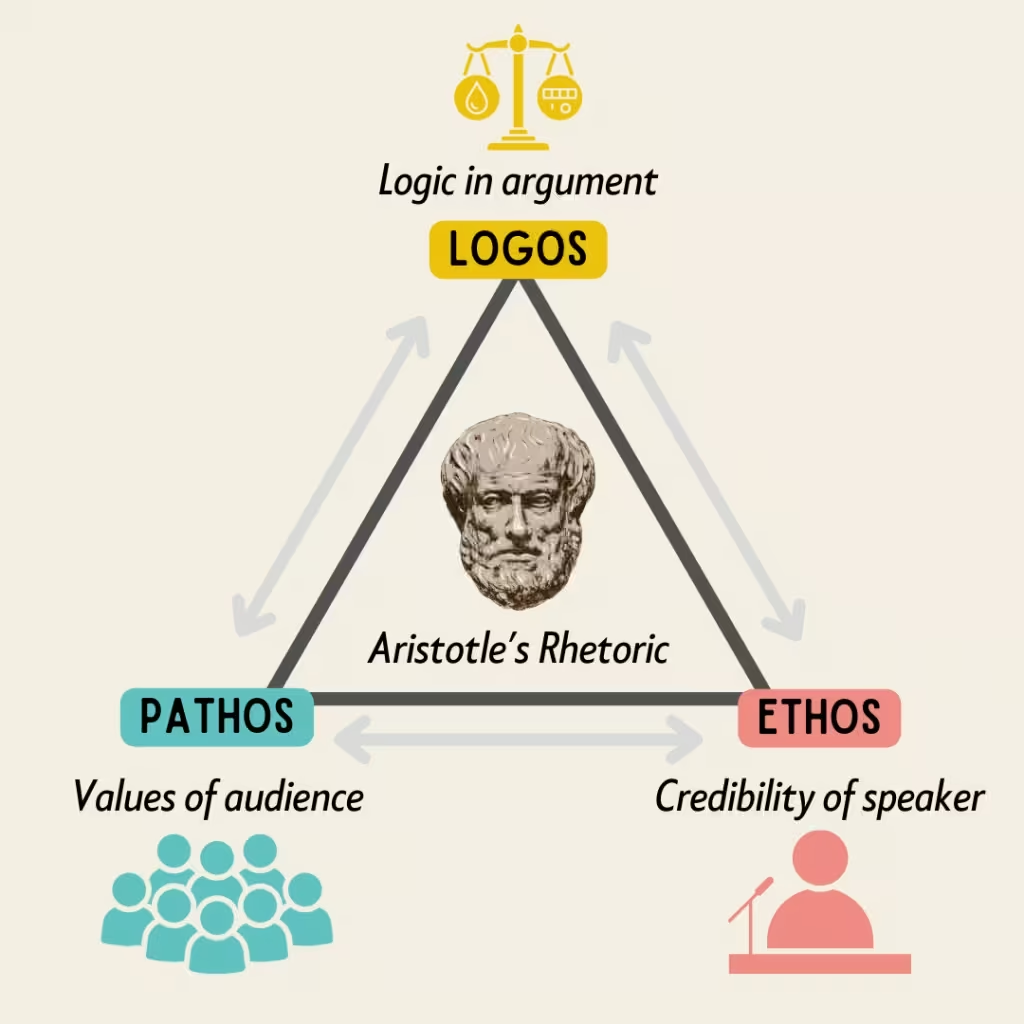
Ethos, pathos, and logos are pillars of ancient rhetorical theory, established by Aristotle. Despite their age, they remain pertinent in the dynamic world of modern marketing. Ethos refers to the credibility or ethical appeal; pathos to the emotional connection; and logos to logical arguments. In the context of marketing, these principles serve to appeal to consumers in various ways.
Why These Classical Principles Remain Relevant Today
Modern consumers are bombarded with information and marketing messages. Cutting through the noise requires connecting with audiences on several levels. Ethos builds trust, pathos creates emotional bonds, and logos appeals to reason. Using these principles effectively can lead to more engaged and loyal customers. They form a strategic foundation, proving that while technology evolves, human nature remains consistent.
The Power of Combining All Three Elements in Marketing Strategies
When ethos, pathos, and logos are combined, marketers can create compelling, multi-dimensional campaigns. For instance, a brand might share customer testimonials to establish ethos. They could use an emotional story to apply pathos. Additionally, presenting data about product effectiveness can demonstrate logos. This comprehensive approach can cater to different audience preferences, maximizing impact and resonance.
With a solid grasp of rhetorical persuasion, one can understand the ways to build credibility. It aids in forging emotional connections. One can also present logical arguments in marketing.
Building Credibility Through Ethos
Establishing Authority and Expertise in Your Industry
Building credibility starts with positioning yourself as an authority. Showcasing your expertise through content like blogs, whitepapers, webinars, and speaking engagements can establish you as a thought leader. Share insights and trends in your industry to demonstrate your knowledge.
Leveraging Social Proof and Testimonials
Social proof reinforces your credibility. Testimonials from satisfied customers, reviews, and case studies create trust. Display these elements prominently on your website. Use marketing materials to show that others have had positive experiences with your brand.
Demonstrating Ethical Business Practices and Transparency
Ethical practices and transparency are crucial. Be honest in your marketing, clearly communicate your business values, and handle customer complaints with integrity. Transparency in business operations, such as fair pricing and ethical sourcing, can further solidify trust.
When you merge these components effectively, you lay a solid foundation of credibility. This foundation aids in creating emotional connections. It supports rational arguments in your marketing efforts.
Creating Emotional Connections with Pathos
Creating an emotional bond with your audience is vital in marketing. Understanding their emotional triggers can be the key to a successful campaign.
Understanding Your Audience’s Emotional Triggers
Knowing what moves your audience is the first step. Are they motivated by a sense of security, adventure, or belonging? Conduct surveys, engage in social listening, and analyze customer feedback to uncover these triggers.
Storytelling Techniques that Resonate with Target Markets
Once you know what emotions drive your audience, you can use storytelling techniques to connect with them. Crafted stories that echo their experiences and aspirations can foster a strong emotional connection. Use relatable characters, compelling conflicts, and satisfying resolutions to make your narrative resonate.
Using Visual and Verbal Elements to Evoke Desired Emotions
Visuals and words work together to evoke emotions. Choose images and colors that align with the feelings you want to spark. Use language that speaks directly to your audience’s heart. Your choice of visuals and words should consistently evoke the same emotions. Whether it’s the comforting tone of a brand supporting new parents, choose the right visuals and words. Capture the thrilling voice of an adventure gear company.
The ability to connect emotionally with your audience lays a solid foundation for logical persuasion and credibility.
Implementing Logical Persuasion with Logos
Presenting Data and Statistics Effectively
Effective use of data and statistics is crucial in compelling your audience through logical persuasion. Data lends credibility to your claims and helps in establishing trust with your audience. To present data effectively:
- Use visual aids like charts, graphs, and infographics to make complex data more digestible.
- Highlight the most pertinent data points to avoid overwhelming your audience.
- Cite your sources to reinforce credibility and show that your data is reliable.
By focusing on these aspects, you can ensure that your audience not only understands your data but also trusts it.
Developing Clear, Rational Arguments
To develop clear, rational arguments for your products or services:
- Identify the Problem: Clearly define the issue or need your product addresses. The more relatable and immediate the problem, the more likely your audience will consider your solution.
- Present Your Solution: Explain how your product or service provides the best solution. Use straightforward language to list the key benefits and features.
- Support with Evidence: Corroborate your arguments with data, testimonies, and expert opinions. This validation helps establish confidence and trust in your audience.
Using Case Studies and Examples
Case studies and concrete examples serve as powerful tools to exemplify how your product or service can solve problems. They provide real-world validation by showing:
- Context: Detailed backdrop that sets the stage for the problem.
- Solution: How your product was implemented and its specific features.
- Results: The tangible outcomes and benefits gained by the client.
These elements not only bring your claims to life but also add a persuasive weight to your marketing efforts.
Mastering logical persuasion through logos requires presenting clear, well-supported arguments. It also involves balancing them with credibility (ethos) and emotional appeal (pathos). This creates a compelling, well-rounded marketing strategy.
Integrating the Three Elements
Balancing Emotional Appeal with Logical Reasoning
Successfully integrating ethos, pathos, and logos requires a deft balance between emotional and logical appeals. Emotional connections can draw your audience in. Logical arguments provide them with reasons to trust and engage with your brand. Marketers need to ensure that their campaigns are not overly reliant on one single element. For example, an ad campaign may evoke strong emotions. However, it can seem manipulative if it lacks credible data and expert opinions. On the flip side, a campaign saturated with statistics without any emotional appeal might fail to engage.
Creating Campaigns That Incorporate All Three Elements
To create a campaign that integrates ethos, pathos, and logos, start by identifying key messages that resonate on multiple levels:
- Ethos: Highlight your brand’s credibility and integrity. Share testimonials, customer reviews, and highlight any industry certifications or awards.
- Pathos: Develop stories and visuals that connect emotionally. Use imagery, music, and narratives that tap into the audience’s feelings and values.
- Logos: Present clear data and statistics to back up your claims. Use logical arguments and present case studies that show tangible results or benefits.
For a product launch, begin with a story (pathos) about how the product addresses a common problem. First, emphasize your brand’s success in solving similar issues (ethos). Then, conclude with compelling data on the product’s performance (logos).
Adjusting the Mix Based on Target Audience and Marketing Goals
The weight given to ethos, pathos, and logos will vary depending on your audience and goals. If launching a new product to a tech-savvy audience, a focus on logos may be prudent. Conversely, a brand aiming to re-establish trust might prioritize ethos and pathos to rebuild emotional and ethical connections.
Understanding your audience through market research can guide this balance. If your audience values detailed information and rational decision-making, balance pathos and ethos with stronger logos elements. For audiences driven by brand loyalty or emotion, a higher emphasis on pathos combined with ethos will be more effective.
By thoughtfully integrating ethos, pathos, and logos, your marketing campaigns will be more engaging, credible, and persuasive. This strategy allows for a more nuanced approach to meeting your marketing objectives. It resonates on multiple levels with your target audience.
Measuring Success and Optimization
Key Metrics for Tracking Effectiveness of Rhetorical Strategies
To measure the success of your ethos, pathos, and logos-driven marketing strategies, you need to identify relevant KPIs. It’s crucial to track these key performance indicators. Start by monitoring metrics such as:
- Engagement Rates: Track likes, comments, shares, and time spent on content to gauge emotional engagement.
- Conversion Rates: Monitor the percentage of visitors who take desired actions, like making a purchase or signing up for newsletters.
- Customer Retention Rates: Measure repeat purchases and subscription renewals to assess long-term trust and satisfaction.
- Sales and Revenue Growth: Analyze overall financial performance to see if your efforts translate into tangible business success.
Adjusting Approaches Based on Audience Response
Once you’ve collected data, it’s time to interpret it and refine your strategies. Understanding your audience’s response involves:
- Feedback Analysis: Regularly review customer feedback and comments to identify what resonates and what doesn’t.
- A/B Testing: Experiment with different content variations to see which combination of ethos, pathos, and logos performs best.
- Behavioral Insights: Use tools like heatmaps and user session recordings to understand how visitors interact with your content.
Continuous Improvement Through Testing and Refinement
Optimization is an ongoing process that requires consistent effort. Implementing a cycle of continuous improvement involves:
- Regular Assessments: Schedule periodic reviews to assess the effectiveness of your strategies and make necessary adjustments.
- Stay Current: Keep up with industry trends and evolving audience preferences to stay relevant.
- Iterate and Improve: Use insights from your assessments and testing to refine your campaigns. Incorporate successful elements. Discard what doesn’t work.
Measuring your rhetorical strategies increases effectiveness. Optimizing them ensures that your marketing efforts remain dynamic. They also stay responsive to changing audience needs.



