

The Paleo-Indian culture, which thrived in Hancock, NY, from approximately 12,000 to 8,000 B.C., laid the foundational cultural and technological innovations that significantly influenced subsequent Native American cultures in the region.
Technological Innovations
Paleo-Indians are renowned for their advanced tool-making techniques, particularly the creation of fluted stone points known as Clovis points. These tools were essential for hunting large game, such as mammoths and bison, and demonstrated a high degree of craftsmanship and adaptability. The effectiveness of these tools not only facilitated successful hunting but also established a technological standard that later cultures would build upon. The innovations in tool-making during this period set a precedent for subsequent cultures, including the Archaic and Woodland peoples, who further refined these techniques for their specific environments and subsistence strategies.
Subsistence Practices
The Paleo-Indians were primarily hunter-gatherers, relying on a mobile lifestyle that adapted to seasonal changes and the availability of resources. This adaptability influenced later cultures to develop more complex subsistence strategies. For instance, as the climate warmed and megafauna became extinct, the Archaic cultures that followed began to incorporate a broader range of food sources, including smaller game and plant materials. Evidence suggests that these later groups engaged in semi-sedentary lifestyles, establishing more permanent settlements based on the knowledge of local ecosystems that originated with Paleo-Indian practices.
Cultural Continuity
The social structures and communal practices established by Paleo-Indians also had lasting impacts. Their group-oriented hunting strategies likely influenced the social organization of subsequent cultures, which developed more complex societal structures involving leadership roles and communal decision-making processes. The emphasis on community cooperation seen in Paleo-Indian hunting bands may have evolved into more defined social hierarchies in later cultures.
Archaeological Evidence
Archaeological sites in Hancock reveal layers of cultural continuity from the Paleo-Indian period through the Archaic and Woodland periods. Artifacts such as stone tools and evidence of early habitation indicate that later inhabitants built upon the knowledge and practices established by their predecessors. For example, the transition from hunting large game to incorporating agriculture—evident in the Woodland period with the cultivation of crops like maize—reflects an evolution rooted in earlier subsistence methods.
In summary, the Paleo-Indian culture significantly influenced subsequent Native American cultures in Hancock, NY, through its technological innovations, adaptive subsistence practices, and social structures. These foundational elements shaped the trajectory of cultural development in the region for thousands of years.
Hancock, New York, holds significant prehistorical importance for Native Americans due to its strategic geographical location and the rich archaeological evidence of various cultural periods.
Geographical Significance of Hancock, NY to Indigenous Prehistory
Hancock is situated at the confluence of the East and West branches of the Delaware River, which provided a vital transportation route for Native American tribes. The river facilitated trade and movement between different groups, making Hancock an important hub in the region. The area’s natural resources, including abundant fish and game, supported diverse subsistence strategies for its prehistoric inhabitants[1].
Cultural Periods
The prehistory of Hancock can be divided into several key cultural periods:
1. Paleo-Indian Period (c. 12,000 – 8,000 B.C.)
– This era marks the arrival of the earliest known inhabitants in North America. The climate during this time was cooler and drier, influencing the lifestyle of these hunter-gatherers who primarily hunted large game.
2. Archaic Period (c. 8,000 – 1,000 B.C.)
– Following the extinction of Pleistocene megafauna, inhabitants adapted their subsistence strategies to focus on smaller game like deer and gathered wild plants. This period saw advancements in tool technology, such as the use of spear-throwers.
3. Woodland Period (c. 1,000 B.C. – A.D. 1,000)
– The Woodland period is characterized by the development of pottery and more complex social structures. Archaeological sites from this time suggest that communities began to form permanent settlements, engage in agriculture, and construct burial mounds. Evidence from sites like Jackson Landing indicates that these communities were involved in trade networks and had social hierarchies as indicated by elite burials with exotic artifacts.
4. Mississippian Influence (c. A.D. 800 – 1600)
– Although primarily associated with regions further south, Mississippian cultural influences reached Hancock through trade and interaction. This period is noted for its agricultural practices, including maize cultivation, although direct evidence from Hancock sites remains limited.
The Archaeological Record
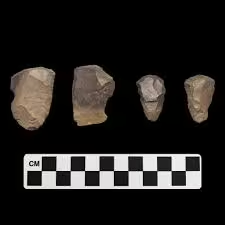
Numerous archaeological sites in Hancock reveal a continuous occupation by Native American groups over thousands of years. Excavations have uncovered tools, pottery fragments, and remains of food sources that illustrate the daily lives and cultural practices of these communities. The Hale Eddy Prehistoric Archaeological District nearby includes over 22 sites that span from the late Paleo-Indian to Late Woodland periods, providing a wealth of information about prehistoric life in the region.
In summary, Hancock’s prehistorical significance lies in its strategic location along the Delaware River and its rich archaeological record that reflects the adaptation and evolution of Native American cultures over millennia.
The Delaware River played a crucial role for Native Americans in Hancock, NY
Sustenance and Resource Access
The river’s rich ecosystem provided abundant food sources for Native American tribes, particularly the Lenape. Fish such as shad and eels were plentiful, and the riverbanks supported diverse plant life that could be gathered for food. The use of fishing nets and hooks made from bone or wood allowed for efficient harvesting of these resources, which were essential for their diet. Additionally, the river facilitated hunting activities by providing access to various game animals that frequented the area.
Transportation and Trade
The Delaware River served as a critical transportation route for Native Americans, enabling them to travel between different regions for trade and communication. Canoes were the primary means of transport on the river, allowing tribes to navigate its waters easily. This connectivity fostered trade networks that extended across vast distances, facilitating the exchange of goods, ideas, and cultural practices among tribes. The river’s navigability was essential for maintaining these relationships and accessing distant resources.
Cultural Significance
The Delaware River was not just a physical resource; it held deep cultural significance for the Native American tribes in the region. The river was integral to their spiritual beliefs and practices, often seen as a life-giving force that connected them to their ancestors and the natural world. Events such as the Rising Nation River Journey reflect ongoing cultural ties to the river, emphasizing its importance in contemporary Indigenous identity and community cohesion[.
Settlement Patterns
The availability of resources along the Delaware River influenced settlement patterns among Native American groups. The fertile land surrounding the river supported agriculture, allowing tribes to cultivate crops such as corn, beans, and squash. This agricultural practice led to more permanent settlements as communities began to establish themselves along the riverbanks. The combination of fishing, hunting, and farming created a sustainable lifestyle that thrived in harmony with the river’s natural cycles.
In summary, the Delaware River was a lifeline for Native Americans in Hancock, NY, providing essential resources for sustenance, facilitating transportation and trade, and holding significant cultural value that continues to resonate today.
______



