
The Evolution of Motel Symbolism in Cinema
Historical Transition of Motels from Roadside Havens to Complex Cultural Symbols
Motels have come a long way from their early days as convenient spots for weary travelers to rest for the night, evolving into rich and multifaceted symbols in cinema. Originally, motels were seen as symbols of freedom and mobility, nestled along the highways that crisscrossed post-war America. They represented the promise of the open road, a safe and welcoming place where families could stop during cross-country trips. These roadside havens were straightforward, utilitarian, and exuded a sense of optimism tied to the American Dream.
Impact of Post-War American Mobility on Motel Representations
The post-World War II era saw an unprecedented boom in automobile ownership and travel culture. As soldiers returned home and the country experienced economic growth, families took to the highways for vacations and new job opportunities. Motels sprang up along these routes to cater to the increasing number of travelers. This surge in mobility deeply influenced how motels were portrayed in films. They became emblematic of the new, fast-paced lifestyle and the spirit of adventure that defined post-war America. Early cinematic interpretations often depicted motels as clean, safe, and wholesome places where families could pause and rejuvenate.
However, as years passed, the representation of motels in films began to change. They transitioned from symbols of freedom and convenience to more complex and sometimes sinister spaces. As economic and social changes took hold in America, so too did the tone of motel portrayals in movies.
Shift from Optimistic Portrayals to More Nuanced and Darker Interpretations
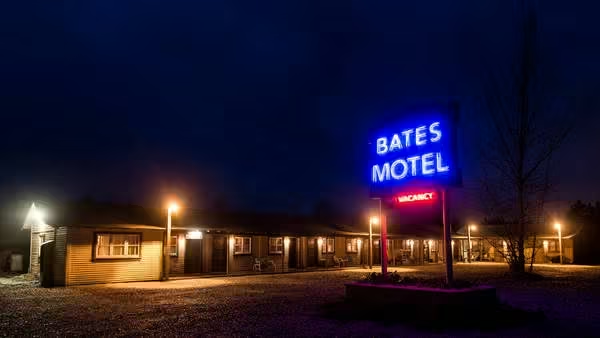
By the 1960s, motels started to take on darker connotations in cinema. This shift can be traced back to the changing socio-economic landscape, where the rise of suburbanization and the decline of inner cities mirrored a growing sense of disillusionment. Films began to explore the less glamorous side of motels, portraying them as places of mystery, isolation, and even danger. Alfred Hitchcock’s “Psycho” (1960) was a significant turning point in this evolution. Its depiction of the Bates Motel as a site of horror set a precedent for many films to follow. Suddenly, motels were no longer just roadside stops but potential scenes of crime and terror, reflecting broader anxieties of the time.
As cinema continued to evolve, so did the portrayal of motels. Modern films often use motels as settings for psychological drama, crime, and horror, highlighting their transient nature and the sense of anonymity they provide. Motels in contemporary cinema are frequently depicted as spaces where characters confront their darkest fears, secrets, and vulnerabilities.
This nuanced representation underscores motels not just as physical spaces but as metaphors for the complexities of human experience. They stand at the intersection of mobility and stasis, freedom and confinement, offering a rich canvas for filmmakers to explore a wide range of themes.
Horror Genre: Motels as Sites of Terror
Analysis of Psycho (1960) and its Lasting Influence on Motel Horror Tropes
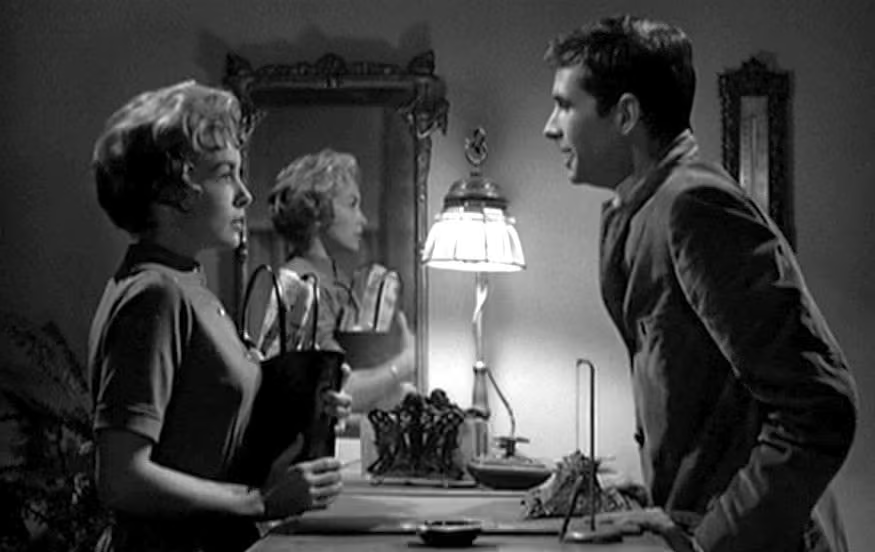
Alfred Hitchcock’s “Psycho” (1960) is a landmark film that fundamentally altered the way motels are perceived in popular culture. Before its release, motels were typically seen as innocuous, convenient places for travelers to rest. However, Hitchcock redefined these roadside stops, transforming them into sinister landscapes ripe for horror. The Bates Motel, with its eerie isolation and sinister caretaker, became the prototype for motels in horror films. This shift showcased motels as spaces where safety is questionable, and normalcy hides dark secrets just below the surface.
“Psycho” introduced several tropes that horror filmmakers continue to use. These include the unsettlingly friendly but off-kilter motel manager, the stark and desolate surroundings, and the inherent menace of a space meant to offer refuge. Motel rooms, with their anonymity and detachment from one’s personal life, became perfect settings for suspense and terror.
Examination of Modern Horror Films Utilizing Isolated Motel Settings
Modern horror films have built on the foundation laid by “Psycho,” continuing to explore motels as sites of terror. Movies like “Vacancy” (2007) and “No Country for Old Men” (2007) depict motels as places where unspeakable events unfold. The isolation and transient nature of these settings contribute to the atmosphere of dread. In “Vacancy,” a seemingly abandoned motel hides a horrific secret, and in “No Country for Old Men,” motels become the backdrop for lethal cat-and-mouse games.
Interestingly, the horror extends beyond physical threats to psychological ones in films like “1408” (2007). This adaptation of Stephen King’s short story harnesses the claustrophobic motel room, turning it into an arena for mental terror. The familiar, yet impersonal environment of a motel room traps the protagonist in a battle with his own sanity.
Psychological Impact of Transient Spaces on Audience Fear Response
The terror associated with motels in horror films largely stems from their transient nature. Motels, by design, are temporary, anonymous lodgings; places where people come and go without forming attachments. This has a profound psychological impact on the audience. The lack of permanence and personal connection makes these settings inherently unpredictable and unnerving.
The anonymity of motels also plays into common fears of the unknown. In a motel, guests have no way of knowing who stayed in the room before them or what sorts of activities transpired. This lack of certainty breeds discomfort and fear, making motels the perfect stage for horror narratives. The juxtaposition of these spaces with horrific events brings viewers’ fears to the fore, manipulating their sense of security in unfamiliar environments.
As we delve deeper into the representation of motels in cinema, we’ll next explore how these spaces function as hiding spots for criminals. This transition highlights the motel’s dual role as a safe haven and a potential threat.
Crime Thrillers: Motels as Criminal Hideouts
Exploration of Motels as Spaces for Criminal Activity and Hiding
Motels, with their inherent transience and anonymity, have long been a favorite setting for crime thrillers. Their liminal nature—neither fully private nor public—makes them ideal for characters operating on the fringes of legality. Numerous films have delved into this, using motels as safe havens, negotiation sites, and crime scenes. The ever-present possibility of unnoticed comings and goings adds to the suspense and anxiety inherent in thriller narratives.
Motels provide a geographical convenience for illicit activities. Their locations, often along highways and away from dense urban scrutiny, offer a hideaway perfect for characters seeking to escape law enforcement or rivals. These roadside sanctuaries allow criminals to remain within reach of civilization while still concealed, contributing to their recurrent use in crime thrillers.
Notable Neo-Noir Films Featuring Crucial Motel Scenes
Motels have carved a niche in the neo-noir genre, where morally ambiguous characters and stark, shadowy settings prevail. A quintessential example is the Coen Brothers’ “No Country for Old Men” (2007), which features multiple tense and brutal scenes set in motels. In this film, motels become sites of deadly cat-and-mouse chases, embodying isolation and lawlessness. Each indistinguishable motel room becomes a potential battleground, reflecting the characters’ precarious existences.
Another excellent illustration is “Drive” (2011) by Nicolas Winding Refn. Here, a motel room serves as a temporary refuge for the protagonist, who lives a dual life as a stuntman and getaway driver. The motel becomes a microcosm of the film’s broader themes of isolation and survival within an unforgiving urban landscape. The stark contrast between the ordinary, almost mundane setting and the extraordinary violence that unfolds there underscores the motel’s role as a crucible for criminal activity.
The Symbolism of Motels as Transitional Spaces Between Law and Lawlessness
Motels often symbolize a liminal space where characters transition between lives, decisions, or states of legality. These settings are neither entirely safe nor entirely threatening, mirroring the moral ambiguity of the neo-noir genre. In “The Fugitive” (1993), the motel serves as a crucial juncture for the protagonist, a falsely accused man on the run. It is here that he orchestrates the next move in his journey toward proving his innocence. The transient nature of motels parallels the characters’ journeys, serving as a metaphor for their tenuous hold on freedom.
The inherent transience of motels also lends itself to the exploration of larger themes such as displacement and uncertainty. The spaces within motels represent a midpoint between escape and entrapment, law and lawlessness. Characters frequently find themselves at a crossroads, with the motel serving both as a temporary sanctuary and a reminder of their impermanence and vulnerability.
As we explore the various ways motels have been represented in different film genres, it becomes evident that their portrayal is as multifaceted as the characters they shelter. Whether as harbingers of terror, havens for fugitives, or metaphors for societal struggles, motels continue to captivate filmmakers and audiences alike.
Drama: Motels as Metaphors for American Life
Economic Struggle and Displacement
Motels, once iconic symbols of freedom and adventure, have also come to encapsulate themes of economic struggle and displacement in American cinema. These roadside stops often serve as settings for stories of individuals and families grappling with financial hardship. The transient nature of motels makes them symbols of instability and a lack of permanent roots, mirroring the precarious situations of the characters who inhabit them.
Films like “The Florida Project” (2017) offer a stark portrayal of life on the edge of society. Set in the shadow of Disney World, this film uses a budget motel as the backdrop for its narrative. The colorful yet decaying setting reflects the vibrancy and resilience of the characters, particularly the children, despite their surroundings representing economic adversity and the threat of displacement.
Long-term Motel Residencies
Many films dive deep into the lives of long-term motel residents, exploring the unique microcosms that form within these transient spaces. “Sunlight Jr.” (2013) is one such example, where the protagonists live in a rundown motel due to their financial constraints. The movie depicts the everyday struggles and fleeting moments of hope, using the motel setting to emphasize themes of love, sacrifice, and the pursuit of a better life.
Long-term motel residencies in these films often serve as a testament to the resilience and aspirations of the characters. Despite the challenging circumstances, the sense of community and fleeting stability they find in these places can be deeply moving.
Social Commentary and Representation
Motels in social commentary films often reflect broader societal issues. These backdrops are not just stages for personal dramas but commentaries on systemic problems such as homelessness, poverty, and the gaps in the social safety net. “American Honey” (2016) uses motels as a recurring backdrop as its characters travel across the American Midwest, living on the fringes of society. The sporadic stays at these motels underscore the themes of wandering and searching for belonging in an economically divided America.
Motels in these films are depicted with a raw realism that challenges romanticized views of life on the road. They serve as reflections of the characters’ quests for stability, identity, and a sense of home, even when life feels transient and uncertain.
Impact on Public Perception
Influence of Media Portrayals on Real-World Motel Business
Cinema has profoundly shaped the public’s perception of motels. The portrayal of motels in films, ranging from welcoming roadside havens to horror-stricken sites and transient criminal hideouts, has affected how people view and experience these establishments in real life. Historically, motels were symbols of freedom and adventure, providing travelers a convenient place to rest. However, films like Alfred Hitchcock’s “Psycho” shifted this perception drastically, embedding a sense of dread and caution towards motels.
The impact of such dramatic transformations in film representations has led to real-world consequences for motel businesses. Many travelers now approach motels with a degree of skepticism, wary of the hidden dangers that might lurk behind their closed doors. This wariness has put pressure on motel operators to improve safety measures, enhance their marketing strategies, and offer more reassuring accommodations to counteract these negative perceptions.
Evolution of Guest Expectations and Experiences Based on Pop Culture Exposure
Guest expectations have evolved significantly, influenced heavily by the cinematic depiction of motels. Audiences exposed to a heightened sense of drama, horror, and criminal activity associated with motels often expect a unique combination of nostalgia and modernity when they visit these establishments.
Consumers now demand higher standards of cleanliness, security, and customer service to feel at ease during their stays. The traditional, minimalistic style of motels has gradually given way to more personalized experiences. Motels are increasingly leveraging their unique, often retro charm while integrating modern amenities and design elements to attract a more discerning clientele. This blend aims to offset the negative imagery placed upon them by decades of thrilling and suspenseful screen narratives.
Balance Between Fictional Representation and Reality in Modern Motel Operations
Motel operators are balancing the thin line between their cinematic portrayals and operational realities. The dichotomy of fiction and reality has pushed motel owners to adapt continually. While motels once embraced their roles as charming, budget-friendly options, they now must combat fictional stigmas imposed by pop culture. This balance is achieved through:
- Improved safety and security protocols to put guests at ease.
- Revitalizing the interior and exterior to break away from outdated and eerie stereotypes.
- Offering personalized and high-quality guest services tailored to modern expectations.
- Employing marketing campaigns that highlight real guest experiences and positive reviews to contrast popular fictional portrayals.
In essence, while the silver screen has undeniably influenced how motels are perceived and operated, a conscious effort by the industry has begun to change the narrative. Moving beyond the portrayals of economic struggle, transient pleasure, or sites of dark intrigue, modern motels are working hard to reconcile their cinematic depictions with the genuine hospitality they strive to offer.
As motels continue to navigate these evolving public perceptions, the story of motels in film and reality continues to unfold, reflecting changing societal values and individual expectations.
______



