
The Evolution of Motels in American Cinema
The Significance of Motels in American Films
Motels have long held a place of significance in American cinema. They captured the essence of freedom and the open road that defined the American spirit in the mid-20th century. In classic films like The Grapes of Wrath (1940), motels symbolized hope, refuge, and the promise of a fresh start. This era presented motels as accessible and egalitarian, offering a room to anyone with a vehicle and a few dollars.
Transformation from Symbols of Freedom to Complex Narrative Devices
Over time, the role of motels in films began to change. As America’s perception of travel and adventure evolved, so did the cinematic portrayal of motels. Initially, these establishments were backdrops for stories about cross-country road trips and the allure of the unknown. However, as storytelling techniques advanced, motels began to represent more complex themes. They transformed into spaces where characters faced profound challenges and personal revelations.
Versatility in Diverse Storytelling Genres
Motels proved to be a versatile setting for various storytelling genres. In horror films such as Psycho (1960), motels transformed into eerie, isolated places where terror lurked behind closed doors. Crime thrillers like No Country for Old Men (2007) utilized motels as clandestine hideaways and scenes of tension-filled showdowns. Even in dramas and romances, motels served as transient spaces that encapsulated moments of intimacy and change.
This versatility allowed motels to be molded into whatever the narrative required, making them a favorite among filmmakers. They became more than just physical locations—they turned into symbols of transition, uncertainty, and the passage of time.
Thus, the evolution of motels in American cinema reflects broader trends in storytelling and societal values. By adapting to various genres and narratives, motels have secured their place as iconic and enduring symbols within the film industry.
Horror Genre: Motels as Places of Terror
The Influence of Psycho (1960)
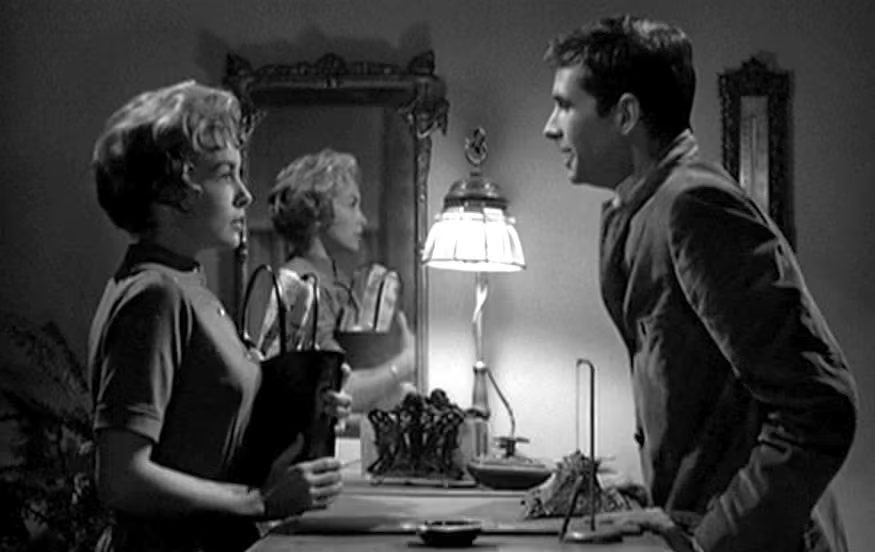
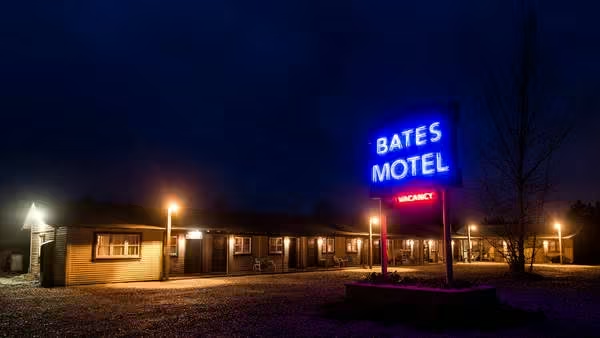
The horror genre owes much to Alfred Hitchcock’s Psycho (1960), a groundbreaking film that indelibly transformed motels into places of terror. The Bates Motel had shadowy corridors. Its eerie isolation made it become a consummate character in the narrative. It set a new standard for suspense and fear. Norman Bates, the seemingly benign motel owner with a sinister alter ego, quickly redefined audience perceptions of motels. Prior to Psycho, motels were largely seen as benign American Dream symbols – affordable, accessible, and adventure-laden. However, Hitchcock’s masterpiece twisted this perception, transforming motels into foreboding spaces where one’s worst nightmares could unfold. The film’s iconic shower scene specifically stands as a pivotal moment in both horror and cinema history, forever cementing the motel as a harbinger of doom.
Modern Interpretations
Building on the legacy of Psycho, modern films like Vacancy (2007) and Identity (2003) have continued to leverage the innate creepiness of the roadside motel. In Vacancy, the audience is introduced to a secluded motel. The motel becomes a deathtrap for its unsuspecting guests. It plays on fears of surveillance and exploitation. Here, the motel is depicted as a sadistic playground for nefarious forces.
Identity explores the psychological unraveling of its characters. It takes place within the confines of an isolated motel. The eerie setting is embedded into a labyrinthine plot. Both films underscore the versatility of the motel setting. It mirrors the inner turmoil of the characters. It also amplifies the tension. These modern interpretations maintain the tradition started by Psycho. They show that motels can serve as a blank canvas. Horror directors paint their most terrifying nightmares on this canvas.
Psychological Impact on Audience Fear
The psychological impact of isolated motel settings on audiences cannot be understated. Motels, by nature, are transitory spaces—temporary and often remote. This ephemeral quality enhances the sense of vulnerability among the characters, and by proxy, the audience. Isolation plays a critical role in building suspense and fear. When characters are geographically and emotionally isolated in these rural or out-of-the-way motels, viewers are viscerally reminded of their own experiences of being alone in unfamiliar places.
The familiarity of motels also stirs unease. They are ubiquitous and ordinary. This makes the horrors that happen within them feel disturbingly possible. These narratives tap into primal fears of the unknown and the unseen, as viewers know that, in reality, a room’s thin walls can do nothing to stave off danger.
As we transition from the terror-filled rooms of horror films to the darker corners of crime thrillers, the evolution of motels in cinema continues to highlight their storytelling flexibility. Moving beyond terror, motels soon become covert hideouts and intersections of fate in the shadowy worlds of crime thrillers.
Crime Thrillers: Motels as Hidden Sanctuaries
Examination of Motels as Hideouts for Criminals and Fugitives in Films
Motels have long served as lifelines for criminals and fugitives in American cinema. Often portrayed as temporary sanctuaries, these secluded spots provide the elusive anonymity that characters on the run desperately seek. Motels in films like No Country for Old Men (2007) underscore this motif, becoming iconic as places where outlaws regroup and re-strategize amid the chaos of their lives.
The Role of Motel Rooms in Noir-Style Storytelling
Film noir, with its shadowy aesthetic and morally ambiguous characters, began utilizing motels as secretive, middle-of-nowhere hideouts. These settings offer a bleak, transient quality that mirrors the fleeting grip these characters have on their freedom. Motels serve as junctions where fateful decisions play out, adding layers of suspense and tension. Movies like Touch of Evil (1958) and The Postman Always Rings Twice (1946) leverage motels’ bleak charm to heighten the atmospheric dread and narrative tension.
Iconic Thriller Scenes Set in Motels
Motels have provided the setting for many unforgettable scenes in crime thrillers, adding elements of tension and suspense that have resonated deeply with audiences. For example, in No Country for Old Men, the relentless pursuit of Antoine Chigurh culminates in a brutal motel showdown, amplifying the film’s nerve-wracking atmosphere. In the climactic scenes of Identity (2003), a motel serves as both a physical and psychological battleground. This emphasizes how these settings can be both hiding places and traps.
By examining motels as hideouts in crime thrillers, we see how these unassuming locations have significantly shaped the genre. They provide both a literal and metaphorical space for characters to confront their demons and plot their next moves. This dynamic exploration of motels continues in various genres, underlining their role as versatile narrative canvases.
Drama and Romance: Motels as Transformative Spaces
Character Development and Emotional Transitions
Motels often serve as significant catalysts for character development and emotional transitions in drama and romance films. They provide a unique setting for characters to confront their vulnerabilities, make critical decisions, and experience profound personal growth. For instance, in “Blue Valentine” (2010), a motel room creates an intimate and confined space. It brings the couple’s emotional struggles to the forefront. They are forced to face the disintegration of their marriage. This setting amplifies the raw, unfiltered nature of their interactions. This makes the audience feel like they are intruding on private, vulnerable moments.
Personal Growth and Relationship Dynamics
Motels also act as a backdrop for relationship dynamics, capturing the essence of both fleeting encounters and deep connections. In Richard Linklater’s “Before Sunrise” (1995), the protagonists stay briefly in a motel. This setting allows them to explore their budding romance. They are away from everyday distractions. This temporary haven becomes a microcosm of their evolving relationship, highlighting the transient yet impactful nature of their connection. Similarly, in “The Florida Project” (2017), the rundown motel is a testament to the resilience and strength of familial bonds amidst adversity. The characters’ interactions within the motel walls reflect their struggles, ambitions, and love. These interactions showcase motels as arenas for intimate human stories.
Symbolism of Temporary Accommodation
The temporary nature of motel accommodation plays a crucial role in dramatic storytelling. It’s a symbol of impermanence, uncertainty, and transitions – themes commonly explored in drama and romance films. Motels represent a pause in the journey, a place where characters can reassess their lives and make pivotal choices. In “Lost in Translation” (2003), this symbolism is shown powerfully. The transient motel environment reflects the protagonists’ disconnection and solitude. It mirrors their inner turmoil and search for meaning. The intervening space of a motel underscores the notion of temporary refuge, reflecting the characters’ psychological and emotional states.
As we continue to explore the diverse roles motels play in American cinema, it becomes evident that their significance extends beyond mere settings. They are transformative spaces that encapsulate the essence of character evolution and complex relationships, adding depth and nuance to the narratives they inhabit.
Impact on Public Perception and Tourism
How Film Portrayals Have Influenced Real-World Motel Business and Tourism
The portrayal of motels in American cinema has undeniably influenced the real-world motel industry. Movies often shape public perception. The depiction of motels as scenes of terror, crime, or personal transformation has had a tangible impact. For instance, Alfred Hitchcock’s Psycho not only transformed motels into places of fear. It also left a lasting impression that motels could be mysterious and dangerous places. This affects how people view and choose motels for their travels.
The Cultural Significance of Famous Movie Motels as Tourist Attractions
Some motels have achieved iconic status due to their roles in popular films. These motels have become pilgrimage sites for film enthusiasts, contributing to local tourism. A prime example is the Bates Motel from Psycho. The set, located at Universal Studios in Hollywood, remains a popular attraction. Similarly, the Timberline Lodge, used in The Shining, attracts fans eager to connect with the film’s eerie ambiance. These motels offer fans a chance to relive their favorite movie moments. They contribute significantly to the motel’s business and local tourism economy.
Balancing Fictional Representations with Authentic Motel Experiences
While films often exaggerate for dramatic effect, real-world motels must balance these fictional representations with authentic experiences. Some motel owners embrace their cinematic fame by offering themed rooms or hosting events that celebrate their film heritage. At the same time, they strive to provide safe, comfortable, and pleasant stays to distinguish reality from fiction. For many, the challenge is to capitalize on the marketing benefits of film exposure. They must also ensure that guests’ actual experiences align with hospitality standards.
The duality of motels as both iconic movie locations and real-world businesses speaks to their unique place in American culture. Motels captivate and frighten audiences with their on-screen portrayals. They will remain critical touchpoints in both cinema and tourism.



