

Archaeological investigations in the Hancock, NY area, particularly along the Delaware River, have uncovered significant evidence of Paleo-Indian culture. Here are some notable findings and sites related to this ancient culture:
Key Archaeological Sites
Hale Eddy Prehistoric Archaeological District (HEPAD)
– The HEPAD includes over 22 prehistoric sites ranging from the late Paleo-Indian period to the Late Woodland period.
– Specific sites within this district that have been investigated include:
– Beaver Lodge Site: Represents a late Paleo-Indian camp with artifacts such as chipped stone debitage and projectile point fragments.
– Delaware Pines Site: This site features vertically stratified cultural deposits from various periods, including the Paleo-Indian era, with a total of 5,188 prehistoric artifacts recovered.
– Evans Site: Preliminary excavations indicate a horizontally stratified site dating to the late Paleo-Indian period, revealing various tools and materials such as Onondaga chert and jasper.
At the Beaver Lodge site, significant artifacts have been uncovered that provide insight into the late Paleo-Indian culture. The findings include:
- Chipped Stone Debitage: Fragments resulting from the tool-making process, indicating the production of stone tools.
- Utilized Flakes: These are flakes that were used for specific purposes, showcasing the practical applications of the tools created by these early inhabitants.
- Projectile Point Fragments: Remnants of spear points or arrowheads that were essential for hunting and defense.
- Bifacial and Unifacial Tools: Tools shaped on one or both sides, demonstrating advanced stoneworking skills. These tools were likely used for various tasks, including cutting and scraping.
- High-Quality Raw Materials: The artifacts are primarily made from Normanskill chert, a high-quality stone suitable for tool-making, indicating a preference for superior materials in crafting tools.
These artifacts collectively illustrate the technological capabilities and daily life of the Paleo-Indians who inhabited the area around Hancock, NY.
The Evans Site plays a crucial role in enhancing our understanding of the Paleo-Indian period through its diverse and stratified archaeological findings. Here are the key contributions of the site:
Stratified Context at The Evans Site
The Evans Site is characterized as a horizontally stratified multicomponent site, indicating that it has layers of occupation from different time periods, particularly late Paleo-Indian and Early Archaic. This stratification allows researchers to observe changes in human activity and tool use over time.
Artifact Diversity
– Excavations at the site have yielded a variety of artifacts, including:
– Cortical and Non-Cortical Flakes: These flakes, made from materials such as Onondaga chert and jasper, indicate tool production and maintenance practices.
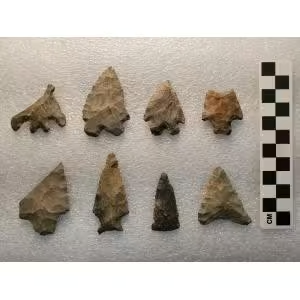
– Projectile Points: The presence of various projectile points, including a Hardaway-Dalton point (Late Paleo-Indian/Early Archaic) and Kirk Corner Notched points (Early Archaic), provides insight into hunting technologies and strategies.
– Biface Fragments and Scrapers: These tools suggest activities related to processing game and other materials.
Early Archaic Evidence
The site contains an “early Early Archaic” jasper workstation, which is significant because it includes artifacts resembling those found at the Shawnee-Minisink Site. This connection helps researchers understand cultural continuity and technological development from the Paleo-Indian to Early Archaic periods.
Cultural Insights
The discovery of dentate stamped pottery and fire-cracked rock indicates shifts in habitation patterns and possibly dietary practices, reflecting changes in the social or environmental context of the inhabitants.
Comparative Analysis
The artifacts from the Evans Site allow for comparative studies with other significant sites in the region, contributing to a broader understanding of Paleo-Indian life and their adaptations to changing landscapes.
In summary, the Evans Site provides valuable evidence of late Paleo-Indian culture through its stratified layers, diverse artifact assemblage, and connections to subsequent cultural periods, enriching our understanding of early human life in northeastern North America.
Historical Context of the Paleo-Inadian Culture in the Hancock, NY Area
The Paleo-Indian culture in the Hancock area is characterized by its adaptation to a changing environment following the last Ice Age. The region’s climate was cooler and drier during their habitation (circa 12,000 to 8,000 B.C.), which influenced their nomadic lifestyle focused on hunting and gathering.
Archaeological Findings
– Artifacts discovered at these sites include:
– Chipped stone tools
– Projectile points
– Scrapers used for processing animal hides
– Evidence of food preparation, such as carbonized seeds from fruits[2][5].
Broader Implications
The archaeological work in Hancock and surrounding areas contributes significantly to our understanding of early human life in northeastern North America. The findings highlight not only the technological capabilities of Paleo-Indians but also their dietary practices and social organization during a pivotal time in human prehistory.
In summary, archaeological digs in the Hancock area have revealed important aspects of Paleo-Indian culture through various sites that provide insight into their lifestyle, tool-making practices, and environmental adaptations along the Delaware River.
______



