
Introduction to Hancock’s Bluestone
Definition and Significance of Bluestone in Hancock’s History
Bluestone is more than just a type of sedimentary rock; it is a cornerstone of Hancock’s rich history and economic development. This type of sandstone, known for its deep blue-grey hues and fine grain, has been quarried in Hancock, NY for centuries. The term “bluestone” specifically refers to this rock extracted from the quarries in the Hancock region, which has gained a reputation for its quality and unique characteristics. Bluestone has been a key contributor to the town’s economy, providing jobs for local residents and fostering a sense of community centered around the quarrying industry.
Overview of the 345-Million-Year Geological Timeline
The story of Hancock’s bluestone began around 345 million years ago during the Paleozoic Era. This extensive timeline marks the formation of sedimentary rock through the deposition of sand, silt, and clay in the Catskill Delta region. Over millions of years, these materials compacted and solidified, resulting in the beautiful and durable bluestone found in Hancock today. This historical geological process not only shaped the physical landscape but also laid the groundwork for the town’s economic and architectural heritage.
Importance in Both Local and Global Architecture
Hancock’s bluestone has immense value, both locally and globally. Locally, it has been used in the construction of numerous buildings, pathways, and monuments, embedding itself in the town’s architectural identity. Globally, the esteemed quality of Hancock’s bluestone has led to its exportation and use in significant structures worldwide. Its aesthetic appeal, coupled with its durability, makes it a prized material in the realm of architecture and construction.
Through understanding the definition, significance, and widespread use of Hancock’s bluestone, one can appreciate its pivotal role in both local history and international architectural projects. The next step in our journey explores the geological formation during the Paleozoic Era, delving into the processes that created these valuable deposits.
Geological Formation During the Paleozoic Era
Formation Process within the Catskill Delta Region
During the Paleozoic Era, approximately 345 million years ago, the region now known as Hancock was part of the vast Catskill Delta. This delta was a major depositional environment, where rivers carried sediment from the eroding Taconic Mountains into a shallow inland sea. Over time, these sediments accumulated, compressed, and cemented together, forming the distinctive bluestone deposits.
Environmental Conditions That Created Bluestone Deposits
The Catskill Delta offered a unique set of environmental conditions ideal for the formation of bluestone:
- Fluvial Systems: Rivers and streams carried massive amounts of sediment, including sand and silt, from upland areas to the delta.
- Calm Water Conditions: Periods of still water allowed fine particles to settle, creating thin, even layers of sediment that eventually became compacted.
- Burial and Compaction: Over millions of years, the accumulated sediments were buried by additional layers, undergoing significant pressure and temperature increases, which eventually turned them into hard, durable bluestone.
Unique Mineral Composition and Characteristics
Bluestone in Hancock is renowned for its unique mineral composition, predominantly made up of quartz and feldspar, along with smaller quantities of other minerals like mica and chlorite. This composition gives Hancock bluestone its:
- Durability: The high quartz content makes the stone exceptionally hard and resistant to weathering.
- Color: Iron oxide and other trace minerals contribute to the characteristic blue-gray hue that defines this stone.
- Textural Qualities: Fine-grained with a smooth finish, making it highly desirable for both functional and ornamental purposes.
These geological characteristics not only make Hancock’s bluestone unique but also play a crucial role in its historical and modern applications.
Transitioning to the next topic, we will explore the regional and historical context that further distinguishes Hancock’s bluestone from other deposits.
The Catskill Delta Connection
Role of the Catskill Delta in Bluestone Formation
During the Paleozoic Era, the Catskill Delta was a significant factor in the creation of Hancock’s bluestone deposits. This region, situated where present-day Hancock, NY lies, experienced dynamic environmental conditions. Sediments carried by river systems were deposited in a deltaic environment. Over millions of years, these sediments underwent burial and compaction, leading to the formation of fine-grained, durable bluestone.
The tranquil water conditions prevalent in the delta allowed for the even and consistent layering of sediment, critical in forming the distinct strata observed in Hancock’s bluestone. These geological processes not only contributed to the unique characteristics of the stone but also influenced its widespread use in construction and architecture.
Geographical Extent of Bluestone Deposits
The bluestone deposits aren’t confined solely to Hancock; they extend across a substantial geographical area. The Catskill region, with its vast network of rivers and streams, played a pivotal role in distributing these deposits. Bluestone is found extensively within the Appalachian basin, covering areas of New York and Pennsylvania.
However, Hancock’s location within the heart of the Catskill Delta has resulted in particularly rich and extensive deposits. This region stands out for its abundance and quality, which have made it a prime site for quarrying and extraction.
Distinctive Features of Hancock’s Bluestone Compared to Other Regions
Hancock’s bluestone is distinguished by several unique features setting it apart from similar deposits found elsewhere. Firstly, its fine-grained nature and consistent coloration, ranging from blue-grey to greenish hues, contribute to its desirability. The specific mineral composition, primarily quartz and feldspar, enhances its durability and aesthetic appeal.
Furthermore, the structural integrity and smooth finish of Hancock’s bluestone make it highly sought after for both local and global architectural projects. These distinctive qualities have cemented Hancock’s reputation as a premier source of high-quality bluestone, contributing significantly to both its historical and modern applications.
The rich history and geological significance of Hancock’s bluestone set the stage for its historical impact and continued legacy.
Historical Quarrying and Usage
Early Extraction Methods and Techniques
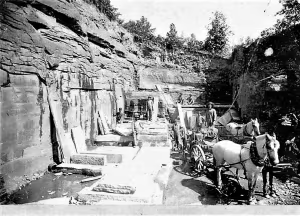
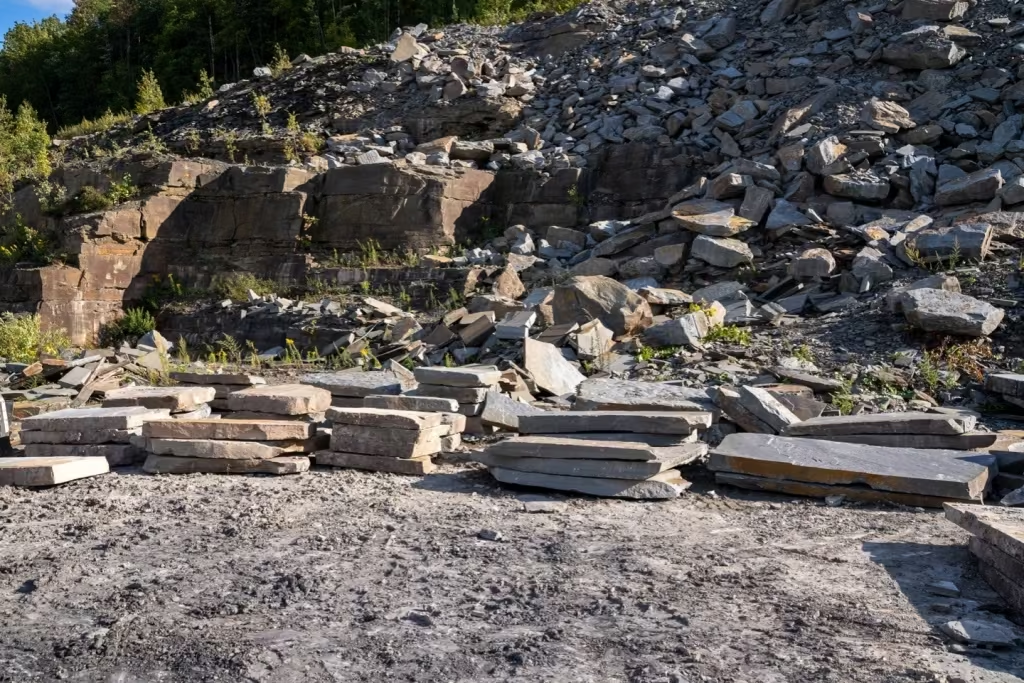
The extraction of bluestone in Hancock began as a labor-intensive process, reflecting the technological limitations of the period. Early quarrying methods relied heavily on manual labor, with workers using simple tools like chisels, hammers, and pry bars to extract the stone. Quarrymen would locate natural fissures and exploit them to break off large blocks of bluestone. These blocks were then transported using horse-drawn carts to nearby construction sites or shipping points.
As technology advanced, so did the techniques used in bluestone extraction. By the 19th century, steam-powered drills and saws became more common, significantly increasing the efficiency and precision of stone cutting. The introduction of these tools allowed for more uniform and higher-quality blocks, enhancing the stone’s desirability for architectural purposes.
Significant Historical Applications and Notable Structures
Hancock’s bluestone has played a crucial role in various significant historical applications. The stone’s aesthetic appeal, coupled with its durability, made it a popular choice for various buildings and landmarks. One notable example is the sidewalks of New York City, where Hancock’s bluestone provided a sturdy and attractive surface that withstood heavy foot traffic for decades. Additionally, the stone has been used in the construction of numerous historical buildings, churches, and public monuments across the northeastern United States.
Besides its regional prominence, Hancock’s bluestone achieved global recognition. It was exported and utilized in prestigious projects worldwide, further solidifying its reputation as a high-quality building material. The stone’s unique characteristics, such as its fine grain and rich blue-gray hue, contributed to its widespread acclaim and enduring legacy in architecture.
Impact on Local Economy and Development of Hancock, NY
The bluestone industry significantly impacted Hancock’s local economy and development. At its peak, the industry provided employment opportunities for hundreds of quarrymen, stonemasons, and laborers. This influx of jobs contributed to the growth and prosperity of the community, fostering an economic boom that saw the establishment of related businesses and services.
Moreover, the demand for bluestone spurred the development of transportation infrastructure, including roads and railways, to facilitate the movement of heavy stone blocks from quarries to construction sites and ports. This improved infrastructure not only benefited the bluestone industry but also enhanced the overall connectivity and accessibility of Hancock.
As the bluestone industry evolved, it left a lasting imprint on Hancock’s heritage and identity. The town’s scenic quarries and historic structures, built from locally sourced stone, serve as enduring reminders of a period when bluestone was a cornerstone of both local pride and economic vitality.
Hancock’s bluestone journey, from its formation millions of years ago to its historical quarrying and usage, underscores its significance as a natural resource and its contribution to architectural history. Today, the legacy of Hancock’s bluestone continues to shape modern applications and inspire preservation efforts, ensuring its place in future generations’ constructions and memories.
Modern Applications and Legacy
Current Uses in Architecture and Construction
Today’s architects and builders continue to admire Hancock’s bluestone for its timeless appeal and durability. It’s commonly used in exterior applications such as:
- Pathways and sidewalks
- Garden patios and steps
- Retaining walls and veneers
Interior designers also appreciate its sleek, refined look in creating countertops, bathroom floors, and fireplace hearths. The stone’s dense composition and weather resistance make it a preferred material for projects that require structural integrity and aesthetic charm.
Global Demand and Exportation
Hancock’s bluestone doesn’t just stay local; it travels far beyond its region. Its premier quality has led to a robust international market. Appreciated in countries from Europe to Asia, this versatile stone is found in plazas, prestigious campuses, and luxury villas. The demand is buoyed by the stone’s ability to age gracefully, maintaining its beauty while enduring the test of time.
Preservation Efforts and Sustainable Practices
In light of growing environmental awareness, the bluestone industry has taken significant steps to ensure sustainability. Preservation efforts include:
- Reclaiming old quarries and repurposing land
- Implementing more efficient and eco-friendly quarrying techniques
- Encouraging the use of bluestone remnants in smaller architectural details to minimize waste
These measures ensure that Hancock’s rich heritage in bluestone production will be preserved and continued responsibly. The blend of historical significance and modern innovation keeps Hancock’s bluestone relevant and desirable in today’s world.