
Introduction to Hancock’s Bluestone Legacy
Brief Overview of Hancock’s Historical Significance as a Bluestone Source
Nestled in the western foothills of the Catskill Mountains, Hancock, NY, has carved out a remarkable historical niche as a preeminent source of bluestone. From the mid-19th century to the early 20th century, Hancock’s rich deposits of this unique stone were extensively mined and transported across the country, contributing significantly to America’s burgeoning infrastructure. The bluestone industry became a cornerstone of Hancock’s economy, supporting countless families and fostering a sense of community identity rooted in quarrying.
Definition and Unique Characteristics of Bluestone
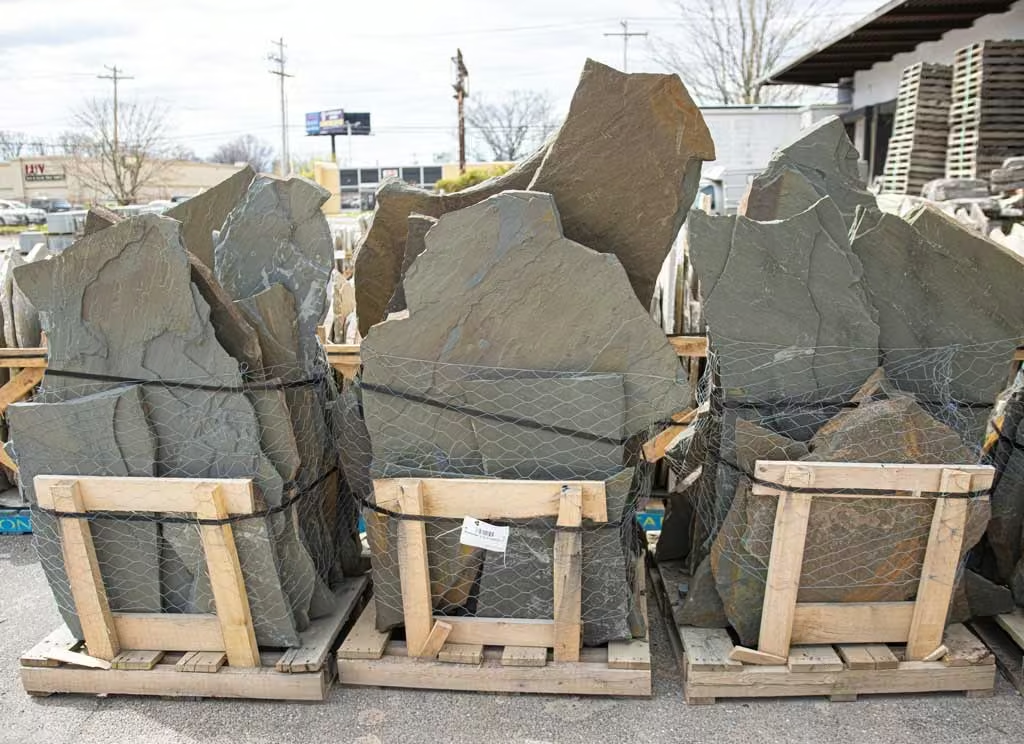
Bluestone, a dense sandstone primarily composed of feldspathic graywacke, garners its name and distinct blue-gray hue from the unique mineralogy of the area it’s extracted from. The rock is celebrated for its durability, fine grain, and its ability to split evenly into thin slabs, making it an ideal material for paving, architectural details, and building facades. One unique aspect of Hancock bluestone is its natural cleft surface, which provides a non-slip texture, enhancing its popularity for outdoor use.
Importance in Architecture and Construction During America’s Development
During America’s rapid growth in the 19th and early 20th centuries, bluestone from Hancock, New York became a sought-after material for iconic structures and urban landscapes. Its resilience and aesthetic appeal made it a favorite among architects and builders, who utilized it in prestigious projects ranging from university campuses to public buildings. Landmarks like the steps of Columbia University’s Low Library and the exacting stonework of the Empire State Building bear testament to the significant role Hancock bluestone played in shaping America’s architectural heritage. This stone not only provided structural integrity but also added a touch of elegance and permanence to the nation’s architectural masterpieces.
The legacy of Hancock’s bluestone is a testament to the town’s contribution to America’s built environment, with its signature stone continuing to be appreciated for its historical and aesthetic value.
The Rise of Bluestone Mining
Timeline of Bluestone Quarrying in Hancock
Bluestone quarrying in Hancock, NY, dates back to the early 19th century. The industry took off in the 1830s, largely driven by the demand for durable and aesthetically pleasing building materials. This marked the beginning of Hancock as a significant source of bluestone. By the mid-1800s, bluestone from Hancock was in high demand, especially in urban areas where it was used for sidewalks, curbs, and building facades.
Traditional Mining Methods and Techniques
Mining methods in the early days were labor-intensive and primarily relied on manual labor. Quarry workers used basic tools such as chisels, hammers, and wedges to extract the stone. The process required identifying a vein of bluestone, and then carefully removing the overburden (the soil and rocks overlaying the desired stone) to reach the bluestone layer. Once exposed, the stone would be split along its natural seams. Workers skillfully placed steel wedges into pre-drilled holes and struck them with sledgehammers to break the stone into usable slabs.
Transportation of the heavy stones from the quarries to processing sites or direct construction sites was another challenge. Initially, horse-drawn carts and short rail lines called “tramways” were utilized to move the hefty slabs.
Peak Period of Bluestone Production and Economic Impact
The peak period of bluestone production in Hancock occurred in the late 19th century and continued into the early 20th century. During this time, the industry thrived and significantly contributed to the local economy. Bluestone from Hancock was highly prized in major cities, particularly New York City, where it was used in a plethora of construction projects from the sidewalks of Manhattan to ornate building facades.
This boom period brought economic prosperity to Hancock. The community witnessed the rise of local businesses and increased employment opportunities driven by the booming quarry industry. Employment in quarries and related industries, such as transportation and construction, became common trades for many families in Hancock, and the bluestone industry formed the backbone of the local economy.
With the rise of bluestone mining, Hancock transformed into a bustling hub of economic activity, setting the stage for significant architectural contributions and providing a glimpse into the industrious nature of early American towns.
Architectural Landmarks and Notable Uses
Famous Buildings Incorporating Hancock Bluestone
Hancock’s bluestone has left an indelible mark on some of America’s most iconic structures. The Empire State Building, a symbol of American architecture, proudly features this durable material. Beyond its aesthetic appeal, bluestone’s resilience was a key factor in its selection for such an enduring landmark. Additionally, Columbia University’s Low Library is another prestigious building that showcases Hancock bluestone, adding to its historical importance.
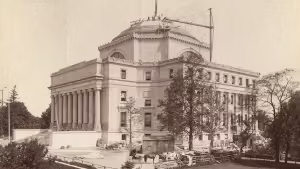
Low Library being built at Columbia University in 1896.
Local Structures and Monuments Showcasing Bluestone
Closer to home, Hancock itself is dotted with structures that highlight the town’s bluestone legacy. Local churches, public buildings, and even residential properties use this distinctive stone, lending them an air of timeless elegance. Monuments and memorials crafted from bluestone offer a tangible link to the area’s rich quarrying past, serving as both art and historical testament.
Why Architects and Builders Preferred This Material
The unique properties of Hancock bluestone made it a favorite among architects and builders. Its fine grain and non-slip texture were ideal for both functional and decorative purposes. The stone’s natural hues, ranging from blue-gray to green, provided a versatile palette for various architectural styles. Additionally, its durability meant structures built with bluestone could withstand the test of time and weather, ensuring longevity and minimal maintenance. These qualities, combined with the ease of working with the stone, cemented its reputation as a premium building material.
To explore more about how this prized stone was extracted and processed, we delve into the intricate quarrying process and the robust industry that brought Hancock bluestone to prominence.
The Quarrying Process and Industry
Explanation of How Bluestone Was Extracted and Processed
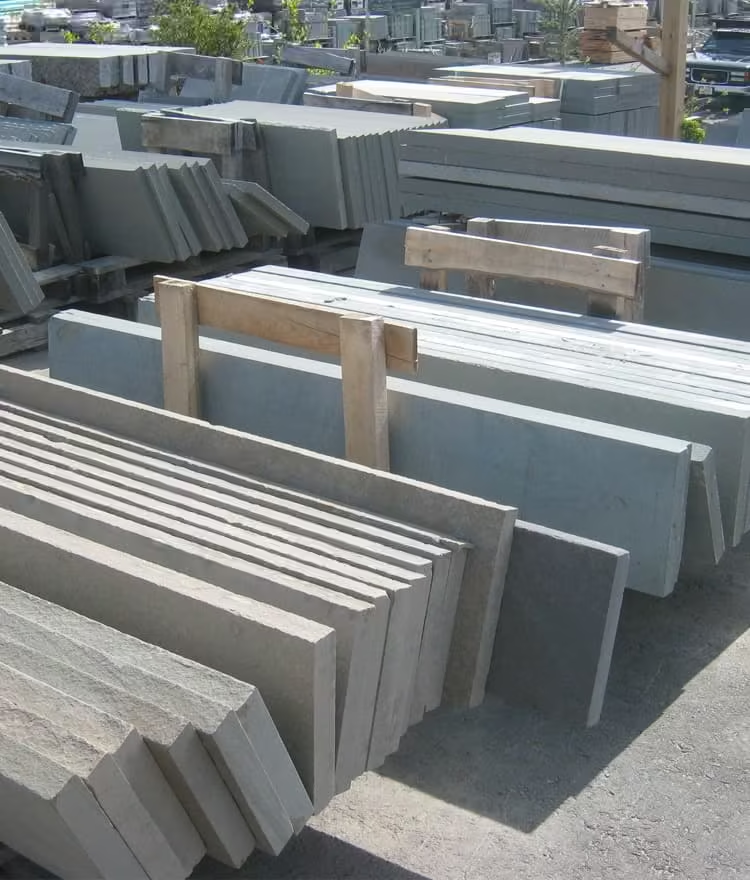
Bluestone quarrying in Hancock, NY, was an intricate process that required skill and precision. The extraction began with locating the right stone beds, often revealed by the unique blue-gray hue distinct to Hancock’s bluestone. Miners used a series of hand tools like chisels, hammers, and wedges to painstakingly carve out large blocks of stone. This manual process ensured minimal damage to the raw material, preserving its integrity for further use.
Once extracted, the bluestone blocks underwent a careful cutting process. Workers used saws, often driven by steam or water power in later years, to divide the stone into manageable slabs. These slabs were then shaped and finished to meet the specifications of various architectural projects, from paving stones to intricate building facades.
Tools and Equipment Used in the Quarrying Process
The tools and equipment essential to the bluestone quarrying process evolved over time but started with basic hand tools:
- Chisels and Hammers: For precise cutting and shaping.
- Wedges: Used to split large blocks along natural seams.
- Saws: Initially hand-powered, later transitioned to steam or water-powered.
Transportation of these heavy stones was also ingenious, utilizing horse-drawn carts, sleds, and eventually short-line railroads to reach broader markets.
Role of Local Workers and Families in the Industry
The bluestone industry in Hancock was a community endeavor. Many local families were deeply involved in the quarrying business, passing down skills and knowledge through generations. Entire families, including women and children, often participated in the process, from extracting blocks to transporting finished stones to market.
These local workers were not just laborers; they were craftsmen who took pride in their work. The meticulous attention to detail and the communal effort put into the bluestone industry helped Hancock earn its place in America’s architectural history.
The involvement of local families in the industry also fostered a strong community identity, with the bluestone legacy continuing to influence Hancock’s cultural and socioeconomic landscape. Today, as the town embraces its historical roots, these stories and traditions provide a rich tapestry that attracts visitors and preserves its unique heritage.
With the foundation of the quarrying process and industries clearly established, the story of modern-day Hancock and its commitment to preserving this rich bluestone legacy will reveal even more about its enduring charm and cultural significance.
Modern Day Hancock, NY, and Bluestone Heritage
Current State of Bluestone Quarrying in Hancock
In modern times, the once-thriving bluestone quarrying industry in Hancock has dwindled. Advances in technology and materials have lessened the reliance on natural stone, and few quarries remain operational. However, Hancock’s legacy as a key supplier of bluestone still resonates through the community. Tompkins Bluestone preserves traditional methods while honoring the town’s historical roots. These contemporary efforts focus on high-quality, bespoke projects that demand the unique properties of Hancock bluestone, ensuring the stone’s continued recognition and use.
______



