
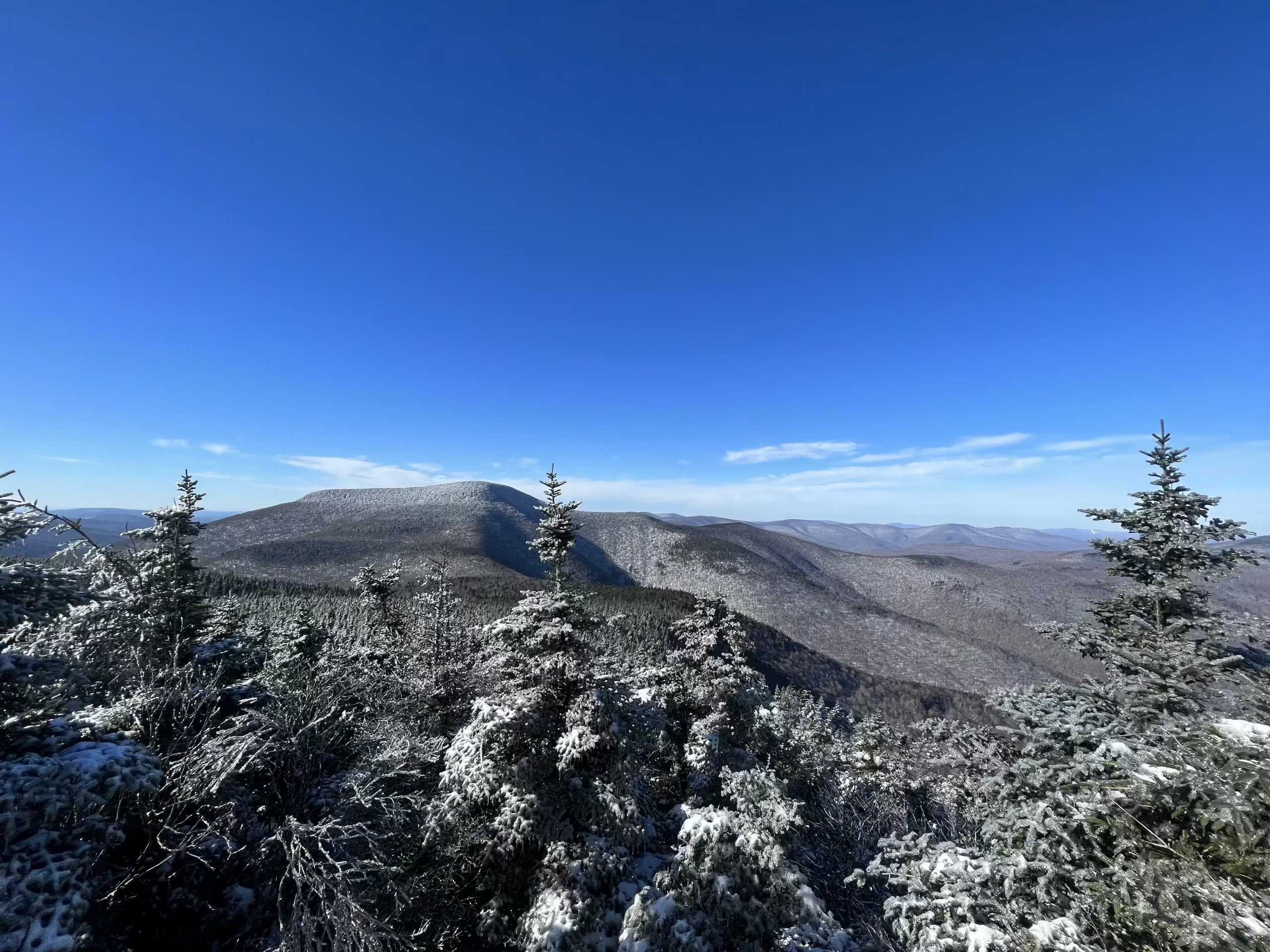
John Burroughs, a renowned American naturalist and writer, eloquently captured the essence of winter in the Catskills through his vivid prose. His writings offer a profound appreciation for the season’s beauty and transformative power. John Burroughs explores several key themes in his essays about winter in the Catskills, reflecting his profound connection to nature and his philosophical insights. These themes include:
The Miracle of Falling Snow
Burroughs describes the mesmerizing effect of falling snow:
“Look up at the miracle of the falling snow,—the air a dizzy maze of whirling, eddying flakes, noiselessly transforming the world, the exquisite crystals dropping in ditch and gutter, and disguising in the same suit of spotless livery all objects upon which they fall”.
He marvels at the artistic qualities of winter, noting:
“How novel and fine the first drifts! The old, dilapidated fence is suddenly set off with the most fantastic ruffles, scalloped and fluted after an unheard-of fashion!”
Clarity and Focus
Burroughs also reflects on the heightened clarity and focus that winter brings:
“In winter the stars seem to have rekindled their fires, the moon achieves a fuller triumph, and the heavens wear a look of a more exalted simplicity”.
The author emphasizes the unique sensory experiences of the season:
“All sounds are sharper in winter; the air transmits better. At night I hear more distinctly the steady roar of the North Mountain”.
The Moral and Philosophical Simplicity of Winter
Burroughs views winter as a season of simplicity and austerity, offering a moral lesson in contrast to the extravagance of other seasons. He writes, “The simplicity of winter has a deep moral. The return of Nature, after such a career of splendor and prodigality, to habits so simple and austere, is not lost either upon the head or the heart”. He likens it to a philosopher returning from indulgence to modesty, symbolized by “a cup of water and a crust of bread.”
Nature’s Transformative Beauty
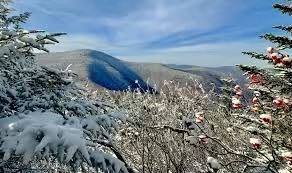
Burroughs celebrates the visual transformation brought by snow and frost, describing winter as an artist that redefines the landscape. He notes: “Look up at the miracle of the falling snow,—the air a dizzy maze of whirling, eddying flakes… How novel and fine the first drifts! The old, dilapidated fence is suddenly set off with the most fantastic ruffles”. This theme highlights his appreciation for winter’s ability to reveal new perspectives on familiar surroundings.
Winter as a Season for Intellectual and Physical Vitality
Burroughs associates winter with mental clarity and discipline, contrasting it with summer’s more leisurely character. He writes: “Winter is of a more heroic cast, and addresses the intellect. The severe studies and disciplines come easier in winter”. For him, winter fosters resilience and focus, which he metaphorically describes as developing “bone and sinew” for literature.
Spiritual Connection to Nature
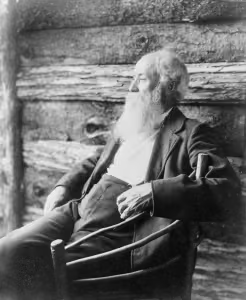
Winter deepens Burroughs’ spiritual connection to the natural world. He perceives nature’s enduring beneficence beneath its harsh exterior: “And if we see truly, the same old beneficence and willingness to serve lurk beneath all”. His writings often frame walks in nature as akin to religious rites, emphasizing communion with the earth.
Observation of Wildlife
Burroughs also delves into observing animal life during winter. His essays document tracks in the snow and explore how creatures adapt to the season’s challenges, showcasing his keen naturalist perspective.
Through these themes, Burroughs’ essays not only celebrate winter’s beauty but also encourage readers to embrace its lessons of simplicity, resilience, and deeper understanding of nature’s cycles.
Burroughs encourages readers to find beauty in winter just as they do in summer:
“He who marvels at the beauty of the world in summer will find equal cause for wonder and admiration in winter”.
These quotes demonstrate Burroughs’ deep connection to the Catskills and his ability to find profound meaning in the winter landscape, inspiring readers to appreciate the season’s unique charms.



