
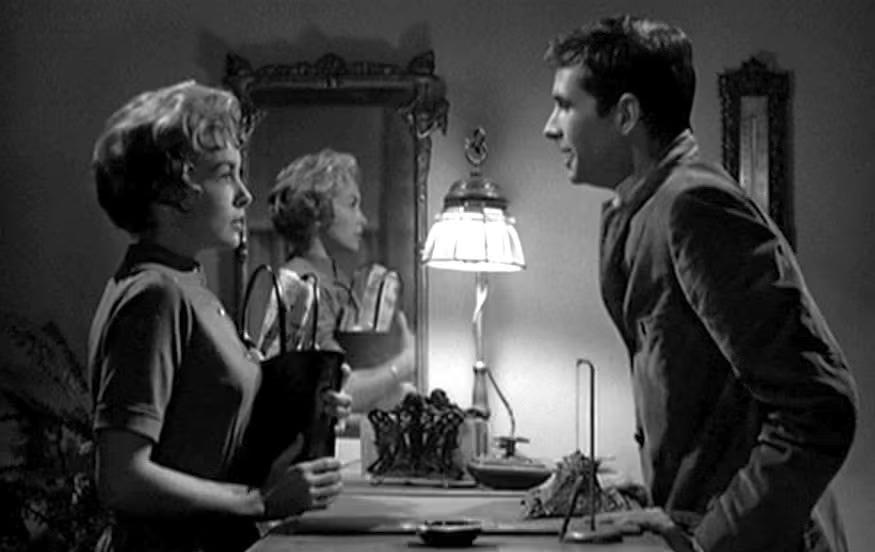
The American Motel: A Cultural Icon in Cinema
Historical Significance of Motels in American Culture and Road Culture
Motels have been an integral part of the American experience, especially since the rise of car-centric travel in the mid-20th century. Originally designed to serve the needs of motorists journeying across the expansive United States, these roadside inns offered convenience and affordability, becoming symbols of freedom and adventure on the American road. They grew in popularity with the development of the interstate highway system, providing much-needed respite for travelers exploring the vast and varied landscapes of the country.
How Motels Became a Perfect Setting for Storytelling in Films
Given their ubiquity in American life, it’s no surprise that motels have become a favorite setting for filmmakers. Motels are versatile backdrops, capable of supporting a wide range of narratives. They are places where diverse groups of people intersect, leading to stories of mystery, romance, conflict, and even horror. The transient nature of motels adds an element of unpredictability and provides a confined space that heightens tension and drama, making them an ideal stage for storytelling.
The Symbolic Meaning of Motels as Transitional Spaces in Cinema
Cinematically, motels often symbolize transitional moments in characters’ lives. They are places of temporary respite where decisions are made, destinies altered, and secrets revealed. This sense of being in-between—whether on a journey, escaping something, or hiding out—resonates with audiences. Motels represent a break from routine, a pause in life’s journey, which can lead to significant plot developments and character transformations.
Motels continue to captivate filmmakers and audiences alike, thanks to their rich cultural symbolism and inherent narrative possibilities. Through carefully crafted scenes set in these captivating spaces, filmmakers have explored a myriad of themes, reflecting and shaping the American cultural experience. Whether invoking the sinister, the suspenseful, or the transformative, motel settings remain a compelling and enduring fixture in cinematic storytelling.
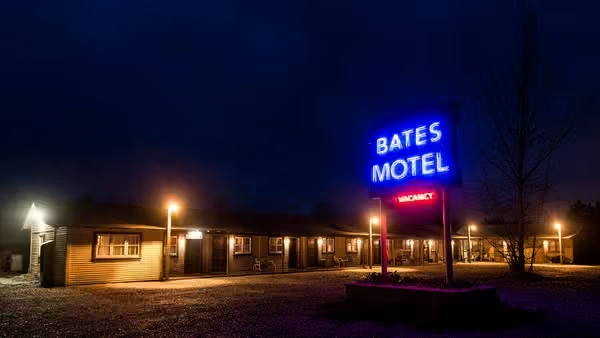
Psycho’s Bates Motel: Defining the Sinister Motel Trope
Transforming the Ordinary Motel into Horror
Alfred Hitchcock’s “Psycho” (1960) forever changed cinema with the introduction of the Bates Motel. This ordinary, unassuming motel, perched on a desolate hill, was transformed into a setting of pure terror. Hitchcock’s genius lay in his ability to take a familiar, mundane location and infuse it with an atmosphere of dread. The Bates Motel became a character in its own right, with its eerie lighting, claustrophobic interiors, and unsettling silence, making audiences view motels through a lens of fear and suspicion.
Lasting Impact on Horror Cinema and Pop Culture
The Bates Motel’s ominous presence left a lasting mark on horror cinema and pop culture. Its influence is evident in countless films and television shows that followed, establishing the motel as a staple of the horror genre. The stark simplicity of the setting allowed the psychological horror to take center stage, focusing on the characters’ inner turmoil and creating an ever-present sense of unease. From “The Shining” to “American Horror Story,” the legacy of the Bates Motel endures, making it one of the most iconic and imitated horror settings in film history.
Architecture and Atmosphere
The architecture of the Bates Motel played a crucial role in creating its sinister ambiance. The design of the motel, with its rundown exterior, dimly lit rooms, and isolated location, contributed to the atmosphere of foreboding. The infamous house on the hill, looming over the motel, added to the sense of terror, symbolizing the dark secrets hidden within. The meticulous attention to detail in the set design and the use of shadow and light created a visual language that communicated danger and dread, enhancing the film’s psychological impact.
As we delve deeper into the evolution of motel portrayals in cinema, it’s clear that the Bates Motel set a high bar for how these spaces can be used to amplify tension and unsettle audiences.
Breaking Bad’s Crescent Motel: Modern Crime Noir
The Role of the Crescent Motel in Breaking Bad’s Narrative
The Crescent Motel in Breaking Bad is more than just a backdrop. It serves as a crucial piece in Walter White’s descent from a high school chemistry teacher to a morally corrupt drug kingpin. The anonymous and transient environment of the motel perfectly reflects the clandestine nature of Walter’s operations. The setting’s nondescript, almost banal quality contrasts sharply with the high-stakes drama unfolding within its walls. This paradox makes the motel an ironic but fitting metaphor for Walter’s double life and escalating criminal endeavors.
How the Motel Setting Reflects Walter White’s Moral Descent
The motel’s seedy atmosphere becomes a visual manifestation of Walter White’s moral deterioration. Early in the series, Walter operates mainly out of his own home and familiar environments, reflecting his initial hesitance and connection to his former, law-abiding life. As his character progresses deeper into the criminal world, the Crescent Motel becomes a frequent location, symbolizing his plunge into immorality. The isolation and anonymity of the motel mirror Walter’s increasing alienation from his family and his former self. The room’s minimalist, almost claustrophobic design underscores his internal entrapment and irreversible commitment to his illicit path.
Filming Techniques to Create Tension in Motel Scenes
The creators of Breaking Bad cleverly use various filming techniques to heighten tension during the motel scenes. Tight, confined shots within the small rooms enforce a sense of pressure and anxiety. The camera angles often emphasize the trapped and cornered feeling that characters experience in these moments. This physical confinement is a metaphor for the limited options and increasing peril faced by the show’s characters.
The use of stark, unflattering lighting in the motel’s interior scenes creates a sense of unease and grime. This enhances the feeling of moral decay associated with these settings. These choices not only develop the narrative but also align the viewer’s emotional journey with that of the characters caught in a web of crime and desperation.
The visual style transforms the ordinary motel setting into a pressure cooker. This is achieved through careful lighting, camera placement, and shot composition. It is filled with tension and drama. It effectively immerses the audience in a world where every decision holds significant, often dangerous consequences.
The Crescent Motel embodies modern noir in Breaking Bad. It reflects the show’s themes of secrecy and moral ambiguity. It also demonstrates how expertly crafted settings can elevate storytelling.
Evolution of Motel Portrayals in Cinema
The Shift from Horror to Crime Drama
Motels have been a staple in American cinema, originally cast in a sinister light by Hitchcock’s Psycho. However, as the years progressed, their narrative roles evolved. While Psycho established motels as settings for horror, subsequent films and TV shows, like Breaking Bad, reframed them within the crime drama genre. The transition showcases motels not just as sites of terror, but as backdrops for complex moral and psychological transformations.
Unique Storytelling Across Genres
Different film genres have harnessed the motel’s unique qualities for diverse storytelling. In horror, motels are often depicted as isolated and eerie, amplifying fear and suspense. In contrast, crime dramas use motels to convey a sense of anonymity and transience, crucial for characters engaged in illicit activities. For instance, motels in neo-noir films often serve as rendezvous points for criminals and undercover agents, heightening the genre’s tension and mystery.
Romantic dramas and comedies also utilize the motel setting but in a different light. Motels in these genres are often depicted as places where characters experience pivotal moments of intimacy or reflection, lending a backdrop of simplicity and real-world relatability.
Influence on Contemporary Filmmaking
Many iconic motel scenes from past films continue to influence contemporary filmmaking. The visual and thematic elements introduced in classics have become benchmarks, inspiring new interpretations. The use of specific lighting techniques, camera angles, and set designs in motels has become a well-documented trope, setting the stage for innovation while honoring the past.
Contemporary filmmakers draw upon these established motifs to craft their own narratives, pushing the boundaries while maintaining a link to the genre’s roots. Filming techniques, such as the tight, claustrophobic shots used in Breaking Bad, evoke a sense of confinement and anxiety, reflecting the characters’ psychological states.
Motel portrayals have come a long way, proving their versatility as cinematic spaces that adapt to various genres and narratives. This evolution allows for continuous reimagining, keeping the trope fresh and engaging for new audiences.
A deep dive into the technical and artistic considerations of filming in motel locations provides valuable insights. It reveals the meticulous effort behind these famous scenes. This highlights the balance between real locations and constructed sets.
Behind the Scenes: Filming in Motel Locations
Technical Challenges and Advantages of Shooting in Motel Locations
Filming in motels comes with a unique set of technical challenges and advantages. Motels, with their limited space and often outdated facilities, can make it difficult for filmmakers to set up large equipment. However, this very constraint pushes creativity, forcing directors and cinematographers to come up with innovative solutions to capture the desired shots. The intimate settings of motel rooms require efficient use of space and lighting. This can ultimately enhance the storytelling by creating a more immersive and claustrophobic atmosphere.
On the flip side, motels offer a high level of control over the environment compared to many other locations. The secluded nature and standard layout provide filmmakers with a manageable and consistent setting. They can manipulate elements like lighting and ambience with minimal outside interference. This control helps in maintaining consistent continuity in scenes, which is crucial for keeping the audience engaged.
Utilizing Motel Architecture
Set designers and cinematographers take full advantage of motel architecture to build an atmosphere that resonates with the narrative. The classic one-story layout and neon signs of motels often evoke feelings of isolation. They convey desolation and anonymity. These elements are frequently explored in suspense and crime dramas.
Motel rooms, with their nondescript furnishings and dated decor, can be easily transformed to fit a variety of cinematic genres. For example, the grimy and run-down exteriors can heighten the sense of danger in thrillers. On the other hand, the stark, unembellished interiors can emphasize a character’s loneliness. They can also highlight moral decline.
Real Locations vs. Constructed Sets
One of the key decisions in motel filming is whether to shoot on real locations or constructed sets. Each approach has its benefits. Real locations often lend authenticity and spontaneity to scenes. They add layers of realism that might be hard to replicate on a set. However, filming at real motels can present logistical issues. These include securing permits, dealing with noise, and limited control over the environment.
Constructed sets, on the other hand, provide unparalleled control and flexibility. Everything from the room layout to the tiniest details of the decor can be designed to serve the storyline. This method was effectively used in Psycho, where Hitchcock replicated the Bates Motel on a sound stage, allowing for meticulous control over lighting and camera angles to maximize suspense.
Whether a real location or a constructed set, motels continue to offer filmmakers a dynamic and adaptable canvas. The intimate, often eerie settings help to amplify character development and plot twists, making motels an enduring staple in cinema.
These behind-the-scenes considerations highlight the thoughtful design and technical expertise that go into creating iconic motel scenes, underscoring their critical role in crafting memorable film narratives.



