
Each season the Upper Delaware Inn in Hancock, New York hosts concertgoers headed to Bethel Woods. Situated about thirty miles northwest of the concert venue, the Upper Delaware Inn is perfectly situated for travelers coming from Syracuse, Rochester, Buffalo, and beyond, who do not want to travel late into the night after the show.
Bethel Woods is a prominent cultural and performing arts center located in Bethel, New York, on the historic site of the 1969 Woodstock Music & Art Fair. This center serves as a significant venue for concerts, festivals, and educational programs, celebrating the legacy of the Woodstock festival while promoting various art forms.
Overview of Woodstock
What was Woodstock?
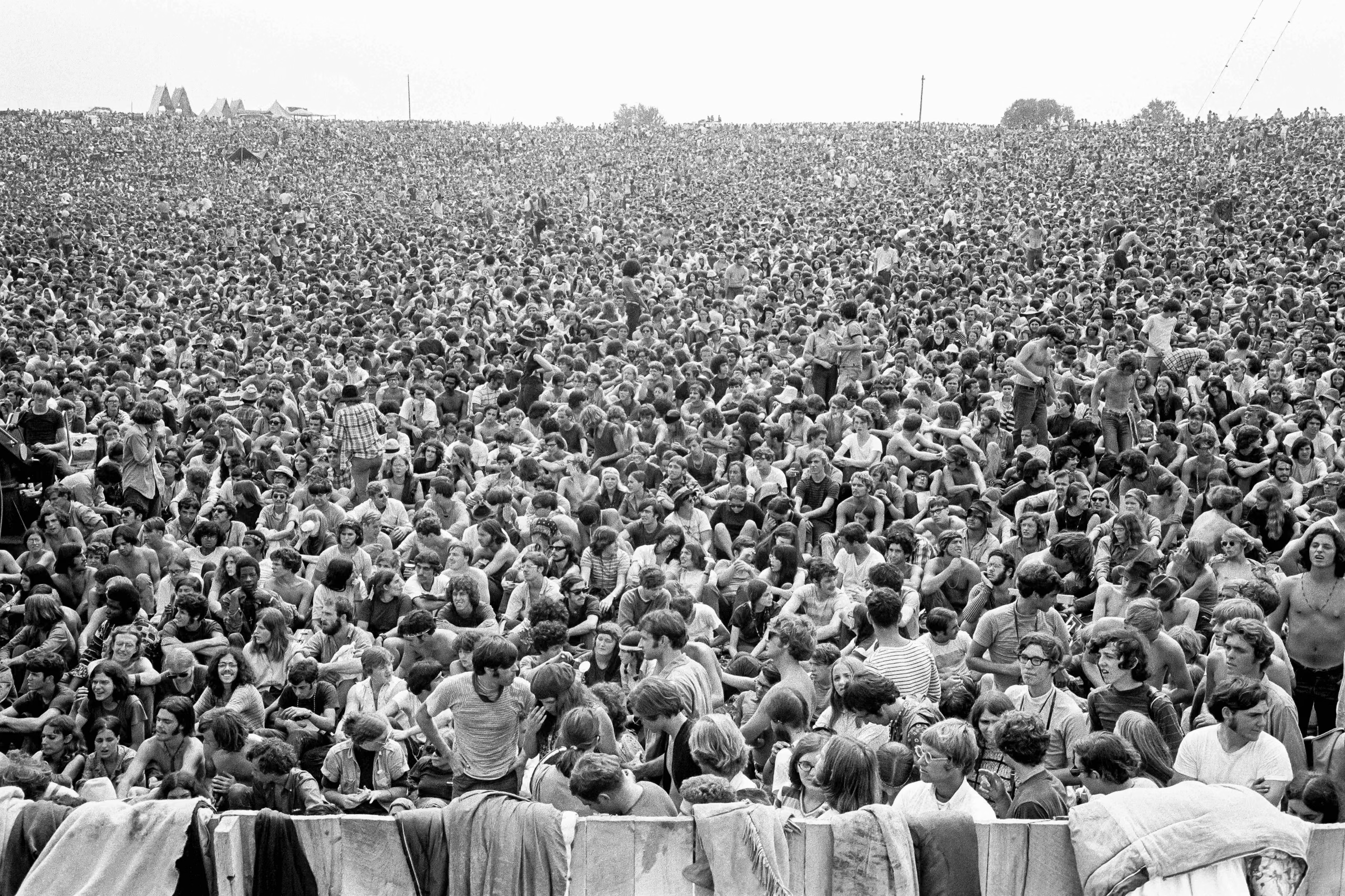
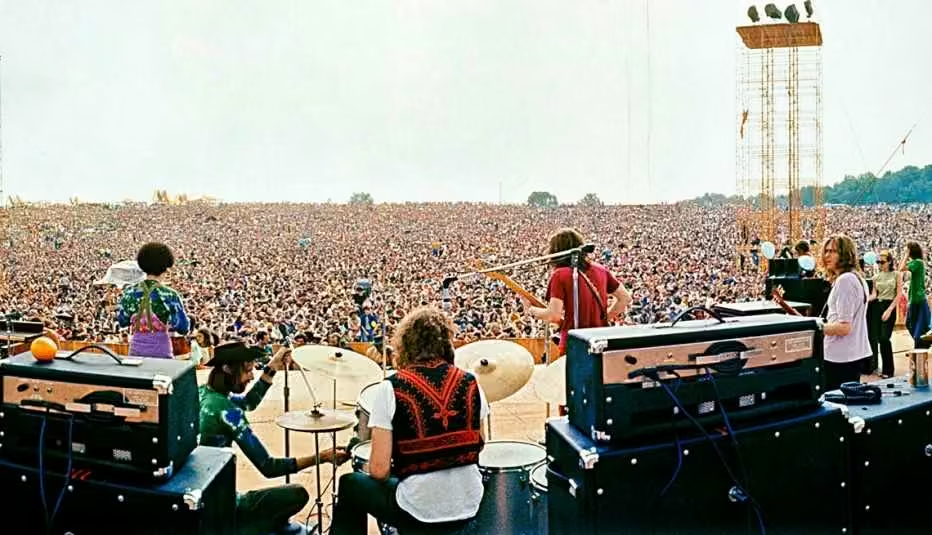
The Woodstock Music and Art Fair, commonly known as Woodstock, was a monumental music festival held from August 15 to 18, 1969, on Max Yasgur’s dairy farm in Bethel, New York. Originally planned for the town of Woodstock, logistical challenges led organizers to this location, which is approximately 60 miles southwest of the original site. The festival attracted over 450,000 attendees, making it one of the largest music festivals in history and a defining event of the 1960s counterculture movement.
1. What was the official name of the event?
Woodstock was officially titled the Woodstock Music and Art Fair, which was also referred to as an Aquarian Exposition. It aimed to be a celebration of peace and music.
2. When did Woodstock take place?
The festival occurred from August 15 to August 18, 1969. It was initially planned for Woodstock, New York, but was ultimately held on a dairy farm in Bethel, New York due to venue issues.
3. How many people attended the festival?
Attendance estimates suggest that approximately 400,000 people were present at Woodstock, making it one of the largest music festivals in history.
4. Who were some of the notable performers?
The festival featured numerous legendary artists including Jimi Hendrix, Janis Joplin, The Who, and Crosby, Stills, Nash & Young. Jimi Hendrix famously closed the festival with his rendition of “The Star-Spangled Banner.”
5. What was the original purpose of Woodstock?
Originally, the event was intended to be a fundraiser for a recording studio in Woodstock. However, it evolved into a major music festival that captured the spirit of the counterculture movement of the 1960s.
6. How did attendees get to the festival?
Due to significant traffic jams leading to the site—some reports indicate up to 20 miles of congestion—many performers arrived by helicopter. The overwhelming number of attendees made it difficult for everyone to reach the venue via conventional means.
7. Was there an admission fee?
While tickets were initially sold for around $6 per day, many attendees ended up entering for free due to the sheer volume of people and lack of fencing at the venue.
8. What were some challenges faced during the event?
The organizers encountered numerous difficulties including financial strains and logistical issues related to food and water supply for attendees. Helicopters were used to deliver essential supplies during the festival.
9. What cultural impact did Woodstock have?
Woodstock became a symbol of peace and counterculture in America during a tumultuous time marked by events like the Vietnam War and civil rights movements. It fostered a sense of community among young people who felt isolated in their beliefs.
Key Facts About Woodstock
- Attendance: Estimates suggest that between 400,000 to 500,000 people attended the festival. The peak attendance was around 460,000.
- Performers: The festival featured 32 acts, including iconic performers such as Jimi Hendrix, Janis Joplin, The Who, and Jefferson Airplane. Hendrix famously closed the festival with his rendition of “The Star-Spangled Banner” on Monday morning.
- Weather and Conditions: The event faced significant challenges due to rain and traffic jams that extended up to 20 miles, complicating access for attendees and performers alike.
- Cultural Impact: Woodstock became a symbol of peace and music during a tumultuous time in American history, coinciding with the Vietnam War. It is often regarded as a watershed moment that influenced social movements and musical trends in subsequent decades.
Historical Context
Woodstock was initially intended as a fundraiser for a recording studio project in Woodstock, New York. However, it evolved into a full-fledged music festival that celebrated peace and love amid the backdrop of social upheaval in the late 1960s. The festival’s success helped solidify its place in cultural history as an emblem of the era’s ideals.
Notable Moments
- Opening Act: Richie Havens opened the festival with an impromptu performance after the scheduled act was delayed. His song “Freedom” became one of the festival’s signature moments.
- Jimi Hendrix’s Performance: Hendrix’s performance on Monday morning marked a dramatic conclusion to the festival. By this time, many attendees had left due to exhaustion and weather conditions, but those who remained witnessed a historic set.
Conclusion
Woodstock remains an enduring symbol of 1960s counterculture, representing ideals of peace, community, and artistic expression. Its legacy continues to influence music festivals and cultural gatherings around the world today. Visitors to the Hancock, NY area are sure to enjoy a visit to Bethel Woods Center for the Arts to catch a show, visit the museum, or simply soak up the vibe of the historic concert site.
______



