

Understanding the Customer Journey: The Foundation of Service Excellence
Mapping Key Touchpoints and Interactions Throughout the Customer Lifecycle
To improve customer satisfaction, you first need to understand the journey your customers take. This journey is a series of touchpoints and interactions, starting from the moment a potential customer becomes aware of your brand, all the way through to their post-purchase experience. Identifying these touchpoints helps to ensure a seamless and positive experience for your customers.
Key stages in the customer lifecycle include:
- Awareness: This is where potential customers first learn about your brand, often through marketing campaigns.
- Consideration: At this stage, customers compare your offerings with competitors.
- Purchase: The moment they decide to buy your product or service.
- Retention: Post-purchase support and engagement to retain the customer.
- Advocacy: Loyal customers advocating for your brand.
Identifying Pain Points and Opportunities for Improvement
Once you map out the customer journey, the next step is identifying pain points—areas where customers may experience difficulties or frustrations. These could be long wait times, complicated onboarding processes, or inadequate support. Identifying these issues can highlight opportunities for improvement. For instance, if customers find the checkout process cumbersome, you can streamline it to enhance their purchasing experience.
Using Journey Mapping Tools and Techniques
To visualize and analyze the customer journey, employ journey mapping tools and techniques. Journey mapping provides a visual representation of the customer’s interactions with your brand. Key tools include:
- Customer Journey Maps: Diagrams that outline the path a customer takes, detailing each interaction.
- Experience Maps: Broader in scope, these maps include emotional highs and lows throughout the journey.
- Service Blueprints: Detailed representations that include processes, people, and technologies involved in delivering the service.
By fully understanding your customer’s journey, identifying pain points, and utilizing journey mapping tools, you set the stage for providing excellent service and seamless customer experiences.
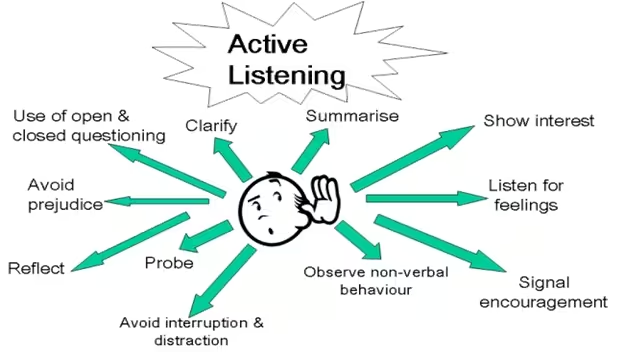
Active Listening: Transform Customer Feedback into Actionable Insights
Implementing Effective Feedback Collection Methods Across Multiple Channels
Listening to your customers is the cornerstone of providing excellent service. To implement effective feedback collection methods, begin by identifying the channels your customers prefer. These may include email, social media, online reviews, surveys, and in-person interactions. By diversifying your methods, you can capture a wide range of insights from different touchpoints.
- Use online surveys to gather quantitative data.
- Leverage social media for real-time feedback.
- Conduct in-depth interviews for qualitative insights.
Training Staff in Active Listening Techniques and Empathetic Communication
For feedback to be truly valuable, your team must be trained in active listening and empathetic communication. Active listening involves fully concentrating, understanding, and responding thoughtfully. Empathetic communication ensures your staff is genuinely engaged and shows they care.
- Role-play customer scenarios during training sessions.
- Teach the importance of non-verbal cues and how to interpret them.
- Encourage staff to paraphrase customer statements to ensure understanding.
Creating a Systematic Approach to Documenting and Analyzing Customer Feedback
Once feedback is collected, it’s essential to have a system in place to document and analyze this information. Create a centralized database where all feedback is stored, making it accessible for analysis and action.
- Categorize feedback into themes such as service, product quality, and user experience.
- Use data analytics tools to identify trends and patterns.
- Develop a feedback loop to inform customers of changes made based on their input.
This approach ensures customer voices are heard and their insights drive continuous improvement across your organization. For the next step in enhancing customer satisfaction, it’s crucial to explore how we meet customers where they are through multi-channel support.
Multi-Channel Support: Meeting Customers Where They Are
Developing a Seamless Omnichannel Support Strategy
Customers today expect seamless support regardless of the platform they use to reach out. Developing an omnichannel support strategy involves integrating various communication channels so information can flow effortlessly between them. Whether it’s email, phone, chat, or social media, each point of contact should be interconnected, providing the customer with a smooth and coherent experience. This comprehensive approach ensures customers do not need to repeat themselves, and their issues are handled promptly.
Ensuring Consistency Across Different Communication Channels
Consistency is the bedrock of a successful omnichannel support strategy. Customers should receive the same high-quality service, regardless of the channel they choose to engage with. This means standardizing the tone, style, and protocols of communication across platforms. Training staff thoroughly in these aspects and ensuring regular audits and feedback loops can help maintain this consistency. This effort assures customers that they will receive reliable and uniform support no matter how they contact you.
Optimizing Response Times for Each Support Channel
Different communication channels come with varying customer expectations for response times. While a 24-hour response time might be acceptable for email inquiries, live chat and social media often come with an expectation for immediate or near-immediate assistance. To meet these varying expectations, it’s crucial to optimize response times tailored to each specific channel. Prioritizing and managing workloads effectively within your support team ensures queries are addressed timely, enhancing customer satisfaction.
As we continuously refine our multi-channel strategy, we move closer to not only meeting but exceeding customer expectations in their service experiences.
Personalization: Creating Tailored Customer Experiences
Utilizing Customer Data to Deliver Personalized Interactions
Personalization in customer experiences hinges on effectively using data. Understand the customer’s preferences, behavior, and history to tailor interactions uniquely to each individual. This could mean offering product recommendations based on past purchases or providing personalized content that aligns with the customer’s interests. The result is an improved customer experience that feels more customized and relevant.
Implementing CRM Systems to Track Customer Preferences and History
Customer Relationship Management (CRM) systems are integral to personalization. They provide a centralized platform to store and manage customer data, including purchase history, preferences, and interaction records. This comprehensive view enables businesses to anticipate customer needs, personalize communications, and provide relevant offers and services. Moreover, CRM systems improve operational efficiency by ensuring consistency and accuracy in customer interactions across all touchpoints.
Training Staff to Provide Customized Solutions Based on Individual Needs
While technology plays a crucial role in personalization, it’s the human touch that truly makes the difference. Train your staff in understanding and utilizing customer data to offer tailored solutions. Equip them with the skills to interpret CRM data and empower them to make decisions that enhance customer satisfaction. This means training in empathetic communication, problem-solving, and proactive service. When staff can confidently personalize their interactions, customers feel valued and understood.
By mastering personalization, businesses not only meet the immediate needs of their customers but also build a foundation for long-term loyalty.
Measuring Success: Leveraging NPS and CSAT Metrics
Understanding and Implementing Key Satisfaction Metrics
Measuring customer satisfaction and loyalty is crucial for any business striving for service excellence. Two of the most widely used metrics are the Net Promoter Score (NPS) and Customer Satisfaction (CSAT).
- Net Promoter Score (NPS): NPS measures the likelihood of customers recommending your brand to others. It’s calculated based on survey responses to a single question: “How likely are you to recommend our product/service to a friend or colleague?” Responses range from 0 (not at all likely) to 10 (extremely likely). Customers are categorized into Promoters (9-10), Passives (7-8), and Detractors (0-6).
- Customer Satisfaction (CSAT): CSAT surveys typically ask customers to rate their satisfaction with a specific interaction, product, or service on a scale (e.g., 1-5). It provides a snapshot of customer satisfaction at a given moment.
Establishing Benchmarks and Tracking Progress Over Time
To leverage NPS and CSAT effectively, it’s important to establish benchmarks and track progress over time. Here’s how:
- Set Initial Benchmarks: Use industry standards or past performance data to set realistic, initial benchmarks for NPS and CSAT scores.
- Frequency of Measurement: Regularly collect NPS and CSAT data through surveys to continuously monitor customer sentiment.
- Trend Analysis: Analyze trends over time to identify patterns in customer satisfaction and the impact of any changes implemented.
Using Metrics to Identify Areas for Improvement
With NPS and CSAT data at hand, businesses can uncover insights to drive improvements:
- Feedback Analysis: Examine qualitative feedback from NPS and CSAT surveys to identify recurring themes or specific pain points.
- Prioritize Actions: Focus on areas with the highest impact on customer satisfaction. For example, addressing issues highlighted by Detractors in NPS surveys can significantly improve overall scores.
- Continuous Improvement: Use feedback to make informed decisions, implement changes, and refine processes to enhance the customer experience.
By understanding and implementing key satisfaction metrics, and establishing benchmarks to track progress over time, businesses can use these metrics to continuously refine their approach. This leads naturally into creating an action plan based on these insights, fostering ongoing improvement and deeper customer relationships.
Taking Action: Converting Feedback into Improvements
Creating an Action Plan Based on Customer Feedback
Acting on customer feedback is crucial for creating a robust improvement strategy. Begin by compiling all feedback collected through various channels such as surveys, social media, and direct interactions. Categorize the feedback into common themes to identify prevalent issues and aspirations.
Next, develop actionable items from this feedback. Prioritize these items based on their impact on the customer experience and feasibility of implementation. Establish clear objectives, assign responsibilities, and set timelines for each task. This structured approach helps ensure that changes are both meaningful and achievable.
Implementing Changes Systematically Across the Organization
Once your action plan is ready, it’s time to roll it out across the organization. Communication is key here. Make sure all departments understand their role in the change process. Regularly update staff on progress and any adjustments needed along the way.
Conduct training sessions if new skills or knowledge are required to implement changes. Ensure that all team members are equipped with the necessary resources and support. Adoption of new practices will be smoother if employees see the direct link between their efforts and improved customer satisfaction.
Measuring the Impact of Implemented Changes
To gauge the effectiveness of your improvements, establish metrics to track the outcomes. Reassess customer satisfaction levels regularly through methods like CSAT surveys and NPS scores. Compare these metrics to your benchmarks to see if there’s an upward trend.
Analyze the data collected to determine which changes are having the biggest impact. Use this information to refine your strategies, ensuring continuous improvement. Remember, frequent evaluation and adjustment are vital to maintaining momentum in enhancing customer experience.
Advancing through these steps will set your organization on the path to truly understanding and meeting customer needs.
Follow-Up Excellence: Building Long-Term Customer Relationships
Developing a Structured Follow-Up Process
Building long-term customer relationships starts with a structured follow-up process. Post-purchase or post-interaction, ensure your team has a clear, consistent method for reaching out to customers. This could include:
- Sending a thank-you email immediately after a transaction.
- Scheduling follow-up calls or emails to check on customer satisfaction after a set period.
- Sending a survey link to collect feedback on their experience.
A structured follow-up process reassures customers that their opinions are valued and helps identify any issues early on before they escalate.
Maintaining Ongoing Communication with Customers
To foster loyalty, maintain ongoing communication. Regular updates on new products, services, or changes within your company keep customers engaged. Consider implementing:
- Monthly newsletters highlighting new offerings and promotions.
- Social media updates to share company news and engage with customers directly.
- Personalized messages or recommendations based on customer history and preferences.
Keeping the lines of communication open shows that you are committed to a long-term relationship, not just a one-time transaction.
Turning Satisfied Customers into Brand Advocates
Turning satisfied customers into brand advocates requires more than just a positive experience—it involves encouraging and empowering them to share their satisfaction. Strategies to achieve this can include:
- Implementing a referral program that rewards customers for bringing in new business.
- Encouraging customers to leave reviews and share their experiences on social media.
- Highlighting customer testimonials on your website or in your marketing materials.
By leveraging the goodwill of satisfied customers, you not only gain new clients but also strengthen your brand’s credibility and trustworthiness.
By focusing on follow-up, ongoing communication, and advocacy, you ensure customers feel valued and heard, laying the groundwork for a loyal customer base.



