

Origins and Early Settlement
Geographic origins along the Delaware River
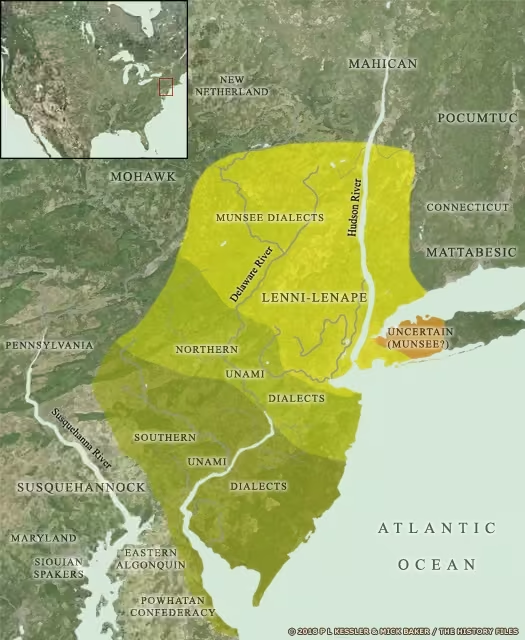
The geographic origins of the three distinct Lenape clans trace back to a broader area that includes parts of New Jersey, Pennsylvania, New York, Connecticut, and Delaware, rather than being limited to the Upper Delaware River region. This lush, resource-rich environment provided a perfect setting for the Lenape people to flourish. The river served as a vital lifeline, offering abundant fish, fertile land for crops, and a means of transportation and communication. The idyllic placement of their settlements along the river enabled the Lenape to develop a coherent society with a deep connection to the natural world around them.
Formation of the three distinct clans: Munsee (Wolf), Unami (Turtle), and Unalachtigo (Turkey)
Over time, the Lenape people organized themselves into three primary clans: Munsee (Wolf), Unami (Turtle), and Unalachtigo (Turkey). This division arose based on geographic territories and shared cultural characteristics.
- Munsee (Wolf): The Munsee clan inhabited the northernmost regions, using their position for both defensive and trade purposes. Known for their strategic prowess, they played an essential role in protecting the broader Lenape territories.
- Unami (Turtle): Central inhabitants of the Lenape, the Unami occupied the heartlands and were viewed as the symbolic core of the Lenape people. Their role: the mediators and the keepers of the central hearth.
- Unalachtigo (Turkey): Settling in the southern areas, the Unalachtigo were adaptors of the diverse ecologies present. This adaptability allowed them to foster relationships with neighboring tribes and enhance the tribe’s capability to thrive in various conditions.
Traditional territories and settlement patterns
The traditional territories of the Lenape spanned a vast region, encompassing what is now New Jersey, eastern Pennsylvania, southeastern New York, and northern Delaware. Their settlements were typically composed of small hamlets or villages, strategically placed to take advantage of natural resources and trade routes. Each Lenape clan was part of a communal system where land was recognized as the collective property of the village, rather than maintained as independent territories.
These settlements were usually situated near rivers or other bodies of water to ensure access to food, transportation, and trade. Cultural Heritage and Traditions: The Lenape built wigwams and other structures using available materials. Their homes were centers of social and cultural activities, supporting the communal lifestyle central to their way of life.
Thus, the founding of the distinct clans and their settlement patterns anchored the Lenape to the Upper Delaware region in a way that fostered a rich cultural and social framework. This historical narrative sets the stage for understanding the significant roles each clan played within the broader structure of Lenape society.
Clan Structure and Social Organization
Significance of the Clan System in Tribal Governance
The Lenape people’s clan system was foundational to their social and political organization. The three clans, Munsee (Wolf), Unami (Turtle), and Unalachtigo (Turkey), each played distinct roles within the tribe. The clans helped ensure that resources were shared equitably, disputes were resolved peacefully, and communities remained united. Decisions were often made through consensus during council meetings where representatives from each clan participated, ensuring that every clan’s voice was heard.
Roles and Responsibilities of Each Clan
Munsee (Wolf)
The Munsee, or Wolf Clan, were traditionally seen as protectors and defenders of their people. They were responsible for the safety and defense of their territories and would lead the charge in warfare if required.
Unami (Turtle)
The Unami, or Turtle Clan, acted as the tribe’s peacemakers and mediators. They played a crucial role in maintaining internal harmony and diplomatic relations with other tribes. Their balanced and wise disposition made them ideal for conflict resolution and governance.
Unalachtigo (Turkey)
Roles and Responsibilities of Each Clan: The Lenape clans, including the Unalachtigo, Munsee, and Unami, collectively facilitated trade and adaptation to new environments. They facilitated trade, adaptation to new environments, and inter-tribal relations. Their role was essential in the tribe’s cultural and economic exchanges.
Matrilineal Society and Leadership Structure
The Lenape society was matrilineal, meaning descent and inheritance were traced through the mother’s line. This matrilineal structure formed the basis of their clan system, where clan membership was inherited from one’s mother. Women held significant authority, as they not only determined clan lineage but also selected the sachems (chiefs) and other leaders. These leaders then guided the clans and the tribe in making pivotal decisions, reinforcing the equitable and balanced governance system of the Lenape.
The intricate clan system underscored the Lenape’s dedication to unity, cooperation, and the well-being of their communities, setting a strong foundation for their cultural and social resilience.
Cultural Heritage and Traditions
Spiritual Beliefs and Ceremonial Practices
The Lenape people hold deep spiritual beliefs integral to their identity. Central to these beliefs is the concept of a Creator who fashioned the world and all beings in it. The Lenape believe in maintaining harmony with nature, acknowledging that all living things are interconnected. Lenape ceremonies and spirituality: The Green Corn Festival honors Lenape spirituality. and ensuring the community’s well-being. These practices involve storytelling, dance, and offerings, creating a profound connection between the people and their environment.
Traditional Knowledge Systems and Oral Histories
The passing down of knowledge through oral traditions is paramount to Lenape culture. Elders share wisdom through stories that teach moral lessons, historical events, and practical skills. These oral histories preserve essential aspects of life, from hunting techniques to medicinal plant knowledge. This rich tradition ensures that each generation stays connected to its heritage and understands its place within the broader narrative of its people.
Artistic Expressions and Material Culture
The artistic contributions of the Lenape people are both beautiful and functional. Lenape crafts: Lenape people skills included beadwork and basket weaving. Designs often incorporate symbolic patterns that convey clan identity and spiritual beliefs. These artistic expressions are more than just aesthetic; they are a means of preserving history, telling stories, and maintaining cultural continuity.
Understanding the intricacies of spiritual beliefs, knowledge systems, and material culture provides insight into the resilience and adaptability of the Lenape people. Their heritage is a testament to their enduring spirit.
Historical Treaties and Diplomacy
1778 Treaty with the United States: Terms and Implications
The Treaty of Fort Pitt, signed in September 1778, was the first official treaty between the United States and a Native American nation, the Lenape.. It included terms that were seemingly favorable to the Lenape. The United States promised to respect Lenape lands and autonomy in the Treaty of Fort Pitt, but these promises were not honored, leading to significant violations of Lenape rights and territory.. In return, the Lenape provided assistance to the Americans during the Revolutionary War. However, the treaty’s promises largely went unfulfilled, leading to future conflicts and feelings of betrayal.
Diplomatic Relationships with Neighboring Tribes
The Lenape’s diplomacy was not limited to interactions with European settlers and the young United States. They also maintained significant relationships with neighboring tribes like the Iroquois, Shawnee, and the Mohican. These relationships were critical for trade, conflict resolution, and mutual defense. Great with diplomatic skills, the Lenape often mediatined disputes among other tribes and strived to maintain peace within their confederacies.
Impact of Treaties on Tribal Sovereignty
The long history of treaties signed by the Lenape, starting before the 1778 treaty, often had dire consequences for their sovereignty. Many agreements resulted in substantial land loss and forced migrations. Continuous westward pressures from the expanding United States meant the Lenape had to move repeatedly, leading to fragmented communities. Despite these challenges, the treaties also demonstrated their enduring resolve to safeguard their cultural identity and heritage.
Today, the legacy of these treaties continues to influence the Lenape people. Their commitment to preserving their history and the continued efforts in advocating for their rights remain central to their identity. Although the historical treaties could not always protect them as they hoped, the Lenape’s spirit and determination reflect their resilience and unyielding connection to their roots and traditions.
Modern Legacy and Contemporary Presence
Current Status and Recognition of the Three Clans
Today, the Lenape people, including the Munsee (Wolf), Unami (Turtle), and Unalachtigo (Turkey) clans, continue to be recognized for their rich heritage and contributions. Each clan preserves its unique identity while collectively fostering the survival of Lenape traditions. Despite historical challenges and displacement, there are thriving Lenape communities across the United States, particularly in Oklahoma, Wisconsin, and Ontario, Canada, where they have established themselves and maintained cultural continuity.
Cultural Preservation Efforts and Educational Initiatives
The Lenape’s commitment to preserving their culture is unwavering. Numerous initiatives have been implemented to keep their traditions alive and educate the younger generations. Cultural preservation efforts include:
- Revitalizing the Lenape language through immersion programs and digital resources.
- Organizing annual cultural festivals to celebrate traditional dances, music, and crafts.
- Curating exhibitions and workshops to showcase Lenape art and history.
Moreover, these efforts are often supported by partnerships with educational institutions and cultural organizations, ensuring a broader reach and deeper impact.
Ongoing Relationship with Ancestral Lands
The connection to their ancestral lands remains a vital aspect of the Lenape identity. Despite forced relocations, the Lenape maintain a profound spiritual bond with the Upper Delaware River region. This connection is honored through:
- Regular visits to sacred sites and participation in traditional ceremonies that honor their ancestors and the natural world.
- Legal actions and negotiations to regain stewardship of key areas and ensure their protection.
- Collaborative conservation projects aimed at preserving the environment and biodiversity of their homeland.
By combining traditional knowledge with contemporary advocacy, the Lenape continue to uphold their heritage and assert their presence in the modern world.